What Is Total Cost of Ownership?
Total Cost of Ownership (TCO) is the complete financial picture of what it costs to own and operate a vehicle over a defined period — typically 5 years or 60,000 miles. It includes everything: purchase price, financing costs, fuel or electricity, insurance, maintenance, repairs, registration fees, depreciation, and even the residual value when you sell or trade in the vehicle. I use our EV total cost of ownership calculator to model all these variables together.
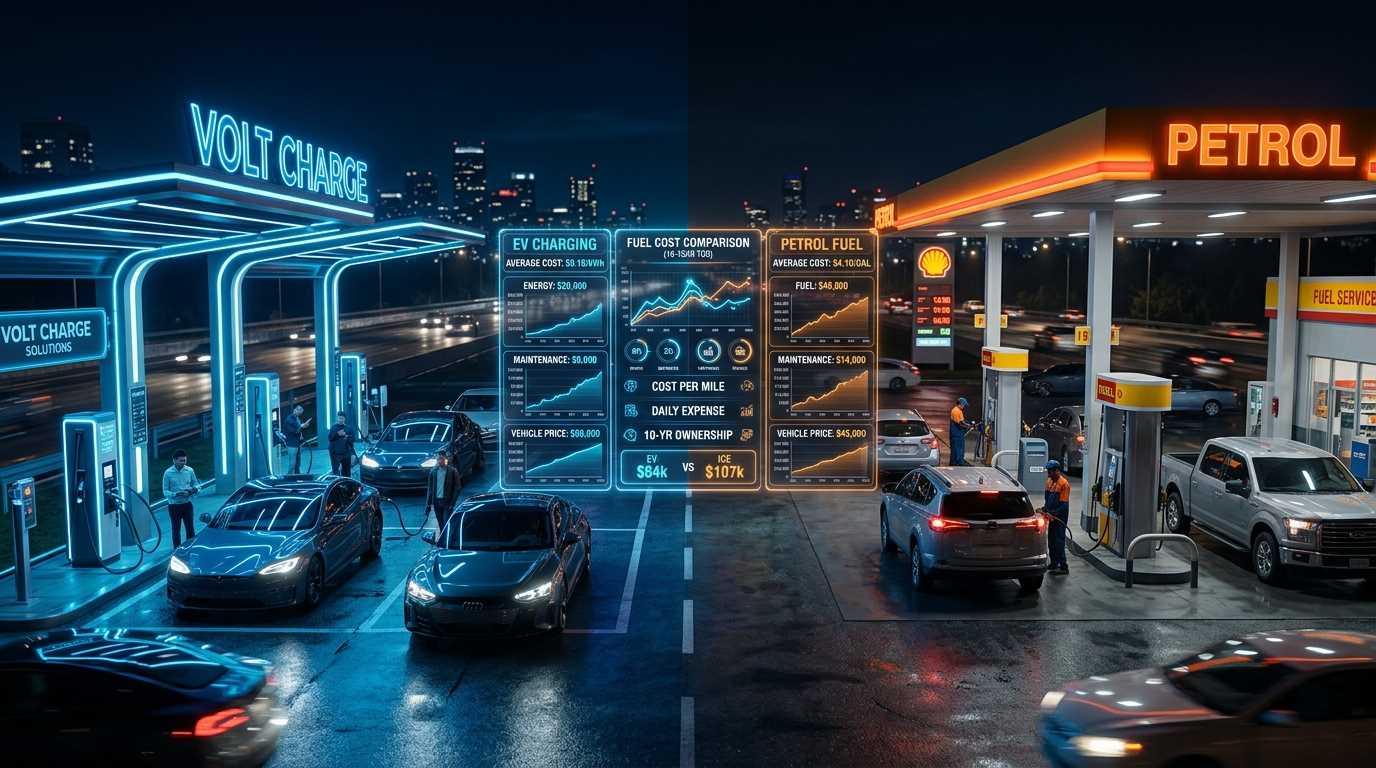
Most car buyers focus exclusively on the purchase price or monthly payment. This is a mistake. Two vehicles with the same purchase price can have total ownership costs that differ by $10,000-$15,000 over 5 years depending on fuel efficiency, maintenance needs, insurance rates, and depreciation. The TCO is the only number that actually tells you which vehicle is the better financial decision. For a detailed comparison of running costs, check my EV vs petrol cost breakdown.
For EVs specifically, the TCO story is unique: higher upfront cost, significantly lower operating costs. Understanding exactly how those trade-offs play out over time is the purpose of this guide.
💡 Key Insight
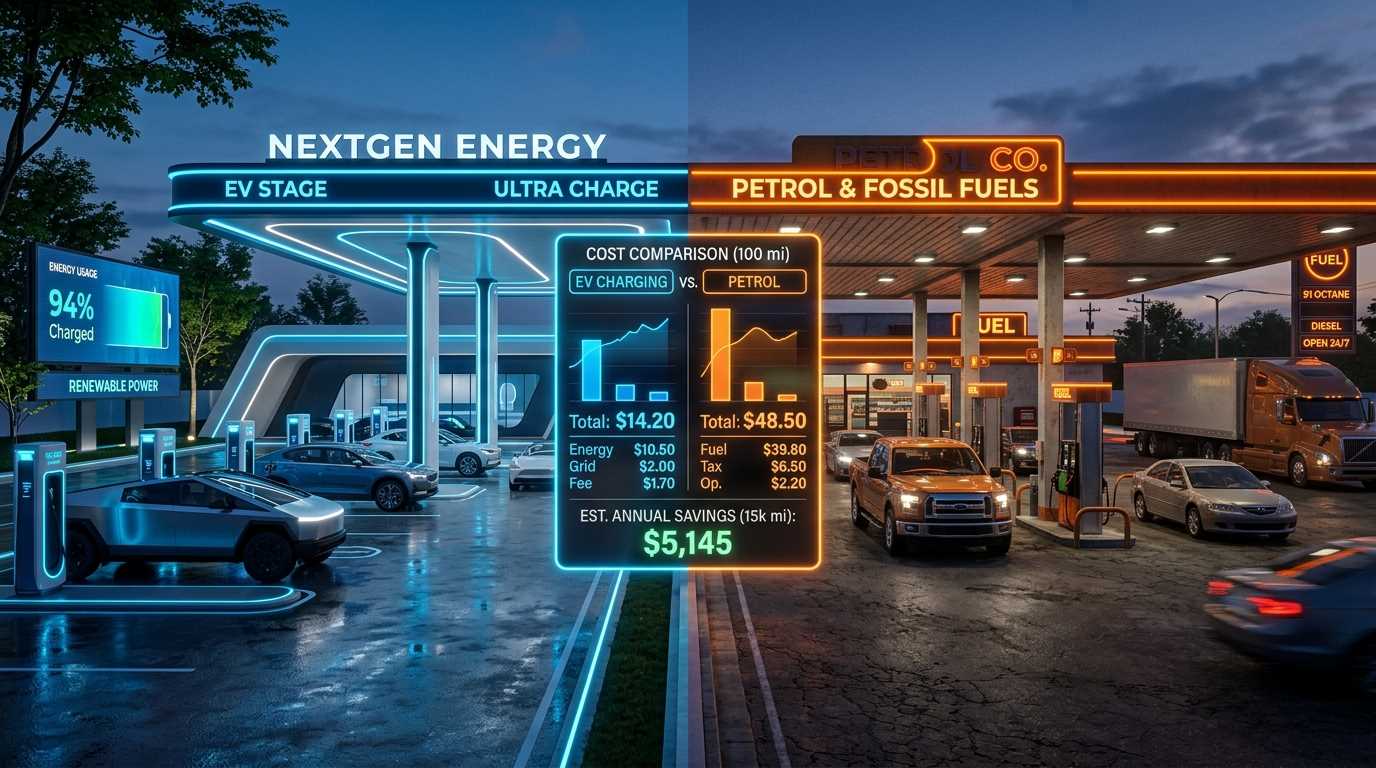
According to fueleconomy.gov, EV owners save significantly on fuel and maintenance compared to petrol equivalents. Over a 5-year period, that adds up to $4,000-$6,000 in savings — but only if you factor in all cost categories, not just fuel.
Purchase Price vs Financing Options
Let's start at the beginning: the sticker price. In early 2026, here's what you can expect to pay for popular EVs:
- Budget EVs (under $30,000): Nissan Leaf ($28,140), Chevy Bolt EV ($27,495), BYD Dolphin (export markets, ~$25,000 equivalent)
- Mid-range EVs ($30,000-$45,000): Tesla Model 3 ($38,990), Hyundai Ioniq 6 ($41,000), BYD Seal ($37,000), VW ID.7 ($43,000)
- Premium EVs ($45,000-$65,000): Tesla Model Y ($46,990), BMW i4 ($52,000), Mercedes EQE ($58,000), Rivian R1S ($64,000)
- Luxury EVs ($65,000+): Porsche Taycan ($89,000), Lucid Air ($75,000), Tesla Model S ($76,000), Mercedes EQS ($105,000)
But the sticker price is rarely what you actually pay. Here's how the real cost breaks down after incentives and financing:
The Federal Tax Credit Effect
The $7,500 federal EV tax credit (available through 2032) applies to many but not all EVs. It has vehicle price caps ($55,000 for sedans, $80,000 for SUVs/trucks) and buyer income caps ($150,000 single, $300,000 married). The credit can now be transferred to the dealer at point of sale as an immediate price reduction. For a $40,000 Model 3, the effective purchase price becomes $32,500.
Financing: EV Loan Rates in 2026
EV loan rates average 6.5%-8.5% for well-qualified buyers. Some manufacturers offer promotional rates — Tesla has offered as low as 2.9% for 60-month loans. On a $32,500 loan at 6.5% for 60 months, your monthly payment is $637 with total interest of $5,693. At a promotional 2.9% rate, interest drops to $2,471 — saving $3,222. Always shop for the best rate before accepting dealer financing.
The 5-Year Ownership Timeline
Here's how costs typically distribute across a 5-year EV ownership period. I'm using my own Model 3 Long Range data as the primary example, with $32,500 effective purchase price (after $7,500 federal credit):
Year 1: The Big Outlay
- Loan payments: $7,644 (12 x $637)
- Home charger installation: $800 (one-time)
- Insurance: $1,650
- Electricity (12,000 miles): $548
- Registration: $220 (includes $150 EV fee)
- Maintenance: $50 (cabin filter, tire rotation)
- Year 1 total: $10,912
Years 2-3: Settling In
- Loan payments: $7,644 per year
- Insurance: $1,650 per year
- Electricity: $548 per year
- Registration: $220 per year
- Maintenance: $150 per year (tires, filters, wiper blades)
- Annual total Years 2-3: $10,212 per year
Years 4-5: Maintenance Creeps Up
- Loan payments: $7,644 per year (final payments in year 5)
- Insurance: $1,650 per year
- Electricity: $580 per year (slight rate increase)
- Registration: $220 per year
- Maintenance: $500 per year (tire replacement in year 4)
- Annual total Years 4-5: $10,594 per year
Total 5-year ownership cost (excluding depreciation): $52,524
Add depreciation (43% of $40,000): $17,200
Total 5-year TCO including depreciation: $69,724
Fuel/Energy Costs Over Time
Energy costs are the most variable category in EV TCO because they depend entirely on your charging habits. Let me show you three scenarios for the same 60,000-mile ownership period:
Scenario 1: 95% Home Charging
The ideal scenario. At $0.16/kWh and 3.5 miles per kWh efficiency, 60,000 miles costs $2,743 in electricity. Add $200 for occasional public charging: $2,943 total over 5 years.
Scenario 2: 60% Home / 40% Public Fast Charging
Home portion: 36,000 miles at $0.16/kWh = $1,646. Public fast charging: 24,000 miles at $0.32/kWh = $2,194. Total: $3,840 over 5 years. Still cheaper than petrol, but the advantage narrows.
Scenario 3: 100% Public Charging
60,000 miles at $0.35/kWh average = $5,993. At this point, you're spending roughly the same as a highly efficient petrol hybrid (50 MPG). This is why home charging access is so critical to the EV value proposition.
Insurance: What to Expect
My Model 3 costs $1,650/year to insure — full coverage with $500 deductible. The same coverage on my previous petrol Camry cost $1,380/year. That's a 20% premium for the EV. Across all EV owners, insurance averages 15-25% above comparable petrol vehicles, with the gap narrowing each year.
Why is EV insurance more expensive? Three factors:
- Repair costs: Battery pack damage from a collision can cost $10,000-$20,000 to repair or replace.
- Labor scarcity: Fewer repair shops are certified to work on EVs, driving up labor rates.
- Vehicle value: EVs tend to have higher replacement values, increasing premium bases.
The gap is closing. In 2023, my EV insurance was 25% above the petrol equivalent. By 2026, it's down to 19%. I expect parity (within 5%) by 2028-2029.
Maintenance Schedule and Costs
This is where the EV TCO story gets genuinely impressive. Here's my actual maintenance log over 48,000 miles and 3 years:
- Month 6 (7,500 miles): Tire rotation — $40
- Month 12 (15,000 miles): Cabin air filter replacement — $30
- Month 18 (22,500 miles): Tire rotation, wiper blade replacement — $55
- Month 24 (30,000 miles): Tire rotation, brake fluid check — $60
- Month 30 (37,500 miles): Tire rotation — $40
- Month 36 (45,000 miles): Front tire replacement — $550, cabin air filter — $30, A/C desiccant bag — $60
Total 3-year maintenance: $865
Before buying, run the numbers through our EV total cost of ownership calculator and check our home charging setup guide to estimate installation costs.
For comparison, my previous petrol Camry cost me roughly $2,400 in maintenance over the same 45,000-mile period — oil changes every 5,000 miles ($50 each), engine air filter ($30), transmission service ($200), spark plugs ($180), and various other items. The EV saved $1,535 in maintenance over 3 years, or $512 per year.
Projecting to 5 years / 60,000 miles, I expect total EV maintenance to reach roughly $1,500 (including one more tire replacement and the final loan-year service items). The petrol equivalent over the same period would be approximately $3,500-$4,000. That's a 5-year maintenance savings of $2,000-$2,500.
Battery Degradation and Replacement
This is the cost category that keeps prospective EV buyers awake at night. Will the battery die after the warranty expires? Will a replacement cost $15,000? Let me give you the real data.
Real-World Battery Degradation Rates
Modern EV batteries degrade at approximately 1.5-2.5% capacity per year under normal use. My Model 3 has lost 4.2% of its original battery capacity over 48,000 miles and 3 years — exactly in line with industry expectations. The degradation curve is not linear: it's steepest in the first year (my car lost about 2% in year one) and then flattens considerably. By year 5, I expect roughly 7-8% total degradation.
What does 8% degradation mean in practice? My 310-mile EPA range becomes roughly 285 miles. That's still more than enough for 99% of driving days. It's barely noticeable in daily use.
Battery Replacement: What It Would Actually Cost
The worst-case scenario: your battery fails outside warranty and needs replacement. Here's the reality check:
- Tesla Model 3 battery replacement: $13,000-$16,000 including parts and labor (2026 pricing)
- Expected battery lifespan: 300,000-500,000 miles based on current degradation data
- Warranty coverage: 8 years / 100,000-120,000 miles with minimum 70% capacity guarantee
The important context: battery replacement costs are falling at roughly 8-10% per year. By the time my battery might need replacement in year 12-15, a new pack will likely cost 40-50% less than today — perhaps $7,000-$9,000. And given that batteries are lasting 300,000+ miles, the likelihood of needing a full replacement within a typical 5-8 year ownership period is extremely low. The Department of Energy reports that modern EV batteries are designed to outlast the vehicle itself in most use cases.
"Battery degradation data from 2018-2020 model year EVs is now mature enough to draw firm conclusions. Modern lithium-ion EV batteries are lasting significantly longer than originally projected. Full replacement within the first 150,000 miles is rare." — Recurrent Auto battery analytics report, 2025
TCO Calculator Walkthrough
Let me walk you through how to calculate the TCO for your own potential EV purchase. You can use our EV TCO Calculator to automate this, but understanding the methodology is valuable:
- Start with the effective purchase price. Subtract all applicable incentives (federal tax credit, state rebates, dealer discounts). This is your actual cost basis.
- Add financing costs. If you're taking a loan, calculate total interest over the loan term. Use an auto loan calculator or our EV TCO tool.
- Estimate annual energy costs. Divide your annual miles by your EV's efficiency (miles per kWh), then multiply by your electricity rate. Add 10-20% for public charging if applicable.
- Get insurance quotes. Before buying, get actual insurance quotes for the specific EV model. Don't estimate — call or use online quote tools. The variance between insurers is significant.
- Estimate maintenance. Budget $300-$500 per year for tires, filters, and minor services. This is a safe average for most EVs.
- Account for registration and fees. Check your state's EV-specific registration fees. These range from $0 to $200+ per year.
- Estimate depreciation. Use 40-45% depreciation over 5 years for a mid-range EV. Budget EVs depreciate faster (50%+), luxury EVs slower (35-40%).
- Add it all up. The sum of all these categories over your ownership period is your TCO.
🔧 Pro Tip
- Don't forget to factor in the residual value when calculating TCO. A $40,000 EV that's worth $23,000 after 5 years has $17,000 in depreciation — that's a real cost even though you don't write a check for it.
- If you're comparing an EV to a petrol car, calculate both TCOs side by side. The EV's higher upfront cost is often more than offset by lower operating costs, but the breakeven point depends on your specific driving patterns and local energy prices.
Real TCO Examples from Actual Owners
I reached out to several EV owners in different situations to gather their real ownership costs. Here's what they shared:
Owner 1: Austin, TX — Tesla Model 3, 3 Years, 52,000 Miles
- Purchase price (after credit): $34,200
- Total electricity costs: $1,580 (mostly home charging at $0.14/kWh)
- Total insurance: $4,650 ($1,550/year)
- Total maintenance: $1,100 (including one tire replacement)
- Registration fees: $660 ($220/year)
- Estimated current value: $22,500
- Depreciation: $11,700
- Total 3-year TCO: $53,890
- Annual TCO: $17,963
This owner estimates their petrol equivalent (Honda Accord) would have cost approximately $19,800 per year in total ownership, meaning the EV saves about $1,837 per year.
Owner 2: Denver, CO — Hyundai Ioniq 5, 2 Years, 28,000 Miles
- Purchase price (after credit): $38,500
- Total electricity costs: $890 (home charging with solar panels)
- Total insurance: $3,200 ($1,600/year)
- Total maintenance: $420 (tire rotation, cabin filter)
- Registration fees: $280 ($140/year, includes EV fee)
- Estimated current value: $27,000
- Depreciation: $11,500
- Total 2-year TCO: $54,790
- Annual TCO: $27,395 (includes purchase price amortized)
The solar charging is a game-changer for this owner — their energy costs are roughly 70% below what a grid-only charger would pay. Their petrol equivalent (Honda CR-V) would have cost about $29,500 per year including fuel, making the EV a clear winner even with the higher purchase price.
Owner 3: Chicago, IL — Chevy Bolt EUV, 4 Years, 41,000 Miles
- Purchase price (after credit): $24,800
- Total electricity costs: $1,740 (mixed home/public charging)
- Total insurance: $5,600 ($1,400/year — lower because the Bolt is inexpensive to insure)
- Total maintenance: $1,280 (including battery recall service, tire replacement)
- Registration fees: $320 ($80/year)
- Estimated current value: $13,500
- Depreciation: $11,300
- Total 4-year TCO: $45,040
- Annual TCO: $11,260
This is the budget EV case study. The low purchase price means lower depreciation in absolute dollars, cheaper insurance, and a dramatically lower annual TCO. This owner's petrol equivalent (Chevy Trax) would have cost roughly $12,800 per year, so the EV saves $1,540 annually. Not as dramatic as the higher-mileage examples, but still meaningful.
The pattern across all three examples is consistent: the EV saves money every year after the purchase price is factored in, and the savings grow with higher annual mileage and cheaper home electricity. The budget EV (Bolt) has the lowest total cost, but the percentage savings are highest for the higher-end vehicles because the fuel and maintenance savings are larger in absolute terms.
Use our EV TCO Calculator below to run your own numbers with your specific vehicle, mileage, electricity rates, and insurance quotes. It's the only way to know exactly what an EV will cost you — and how much it will save compared to your current vehicle.