Why Most People Overpay for Energy
I've been helping people understand their energy bills for over five years now, and one pattern repeats itself every single time: people have no idea how much electricity their home actually uses. They get a bill for $187, grimace, pay it, and move on. Next month it's $203. They grumble again. Repeat.
The problem isn't that people are careless. The problem is that utility bills are designed to be paid, not understood. Your bill shows total kWh and total cost, but it doesn't tell you which appliances are driving that number. It doesn't show you that your 15-year-old refrigerator is costing $180 a year to run — $90 more than a modern equivalent. It doesn't flag that your water heater thermostat is set to 140 degrees when 120 would be perfectly comfortable and save $35 annually.
Here's a concrete example from last month. A family in Ohio called me about their $320 electric bill in February — a month when they thought they should be paying closer to $180. Without any calculators or tools, we sat down and guessed. We thought maybe the space heaters in the kids' rooms. Turns out it was three things: an old dehumidifier running 24/7 in the basement ($67/month), electric baseboard heaters in an unsealed sunroom ($95/month), and a well pump with a failing pressure switch ($48/month). That's $210 in identifiable, fixable waste.
They found all of this in about 20 minutes using a home energy usage calculator. The calculator didn't magically reduce their bill — it gave them the information they needed to take action.
💡 Key Insight
The average US household uses 899 kWh per month according to the EIA's 2025 data. But the range is massive: efficient homes use 400-600 kWh, while larger homes in extreme climates can exceed 2,000 kWh. Knowing where you fall in that range is the first step to saving money.
How Calculators Reveal Hidden Savings
Energy calculators work by taking the guesswork out of the equation. You input a few key numbers — your monthly bill, square footage, major appliances, local electricity rate — and the calculator produces an estimated breakdown of where your energy goes and where you can cut.
Think of it like a financial budget tracker, but for electricity. Just as Mint or YNAB shows you that you're spending $400 a month on dining out (ouch), an energy calculator shows you that your HVAC system is consuming 47% of your total usage and your water heater is another 18%.
The calculators I recommend use three data sources to produce accurate estimates:
- Your actual utility bills — the most important input. Twelve months of billing data gives the calculator a complete picture of your seasonal patterns.
- Regional benchmarks — the Department of Energy publishes average consumption data by state and climate zone. The calculator compares your usage against similar homes.
- Appliance databases — standard wattage and usage patterns for common appliances, updated annually as efficiency standards change.
What makes this approach powerful is the comparison framework. When a calculator tells you that homes of your size in your climate zone average $1,800 per year on electricity and you're at $2,900, that's a powerful motivator. You now have a specific target: $1,100 in potential savings. Try an energy savings calculator to find your own target number.
"The first rule of energy savings is measurement. You can't reduce what you don't measure. The second rule is benchmarking — knowing what good looks like for your specific situation."
The 3 Numbers You Need to Track
If you only remember three numbers from this article, make them these. I've seen people transform their energy spending by tracking just these metrics:
- Cost per square foot per year. Take your annual electricity cost and divide by your home's square footage. A well-managed home in a moderate climate runs $0.80 to $1.50 per square foot annually. If you're at $2.00+, there's real room for improvement. For a 2,000 sq ft home paying $3,600/year, that's $1.80/sq ft — right in the normal range, but still worth examining room by room.
- kWh per occupant per month. The national average is about 225 kWh per person per month. A family of four using 1,200 kWh/month (300 per person) is above average. This number helps you distinguish between "we use a lot because we have a big family" and "we genuinely have efficiency problems."
- Peak vs. off-peak usage ratio. If your utility offers time-of-use rates, this is critical. Even without TOU rates, understanding when you use the most power helps you identify opportunities. Homes that can shift 30% of their usage to off-peak hours can save 10-20% on their bills with TOU pricing.
🔧 Pro Tip
- Write these three numbers on a sticky note and put it on your fridge. Check them against your monthly bill. If any number creeps up, investigate immediately.
- Track them in a simple spreadsheet. After six months, you'll see patterns that would be invisible from individual bills.
Step-by-Step Energy Audit at Home
You don't need to hire a professional for a basic energy audit. Here's the process I walk people through, and it takes about 90 minutes:
Step 1: Gather 12 months of bills. If you have online account access, download them. If not, call your utility and ask for usage history. You need total kWh and total cost for each month.
Step 2: List every major appliance. Walk through your home and write down: refrigerator age and model, water heater type and temperature setting, HVAC system age and SEER rating, washer/dryer type, number of TVs and computers, any pool pumps or well pumps, and all heating sources.
Step 3: Run the numbers through a calculator. Input your data into our home energy calculator. It will estimate your baseline usage, identify outliers, and suggest priority areas.
Step 4: Do a physical walkthrough. With the calculator results in hand, walk through each room. Look for: lights left on in empty rooms, electronics plugged in 24/7, gaps around windows and doors, HVAC vents blocked by furniture, and appliances running when they don't need to be.
Step 5: Create an action plan. Categorize findings into three buckets: things you can fix today for free (turning off standby devices, adjusting thermostats), things you can fix this week for under $100 (weatherstripping, LED bulbs, smart power strips), and things that need planning and budget (appliance replacement, insulation, HVAC upgrades).
Quick Wins That Save Immediately
These changes cost almost nothing and start saving from day one:
- Lower your water heater to 120 — F. Most are set to 140 — F by default. Every 10-degree reduction saves 3-5% on water heating. That's $25-$60/year for most homes.
- Unplug vampire devices. Phone chargers, cable boxes, gaming consoles, and coffee makers with clocks draw 5-25 watts even when "off." A typical home has 20-40 such devices. Total vampire load: 150-400 watts continuously. That's $130-$350 per year. Use smart power strips to cut power automatically.
- Adjust your thermostat by 2 degrees. In winter, set it to 68 — F when home and 62 — F when away or sleeping. In summer, 76 — F when home and 82 — F when away. The DOE estimates 1-3% savings per degree. Two degrees year-round saves roughly $70-$150 annually.
- Switch to cold water laundry. About 90% of a washing machine's energy goes to heating water. Modern detergents work excellently in cold water. Savings: $40-$80/year for a family of four.
- Clean your dryer lint trap every load AND the vent pipe annually. A clogged vent makes your dryer work 30% harder. Cleaning it takes 15 minutes and saves $25-$50/year while reducing fire risk.
💡 Key Insight
Combined, these five quick wins save the average household $285-$690 per year. Total cost to implement: under $50 for smart power strips. Time required: about 2 hours on a Saturday afternoon. That's a return of 570-1,380% on your time investment.
Medium-Term Upgrades Worth Doing
These investments pay for themselves within 1-3 years and make a noticeable difference in your monthly bills:
- Smart thermostat ($120-$250). Learns your schedule, adjusts automatically, and can be controlled remotely. Average savings: 10-15% on heating and cooling costs. Payback: 12-18 months for most homes. The Nest Learning Thermostat and Ecobee Smart are the two I recommend most often.
- LED bulb replacement ($50-$150 for a whole home). If you still have incandescent or CFL bulbs, switching to LEDs saves $6-$8 per bulb per year in electricity and replacement costs. A typical home has 30-50 bulbs. Total savings: $180-$400/year.
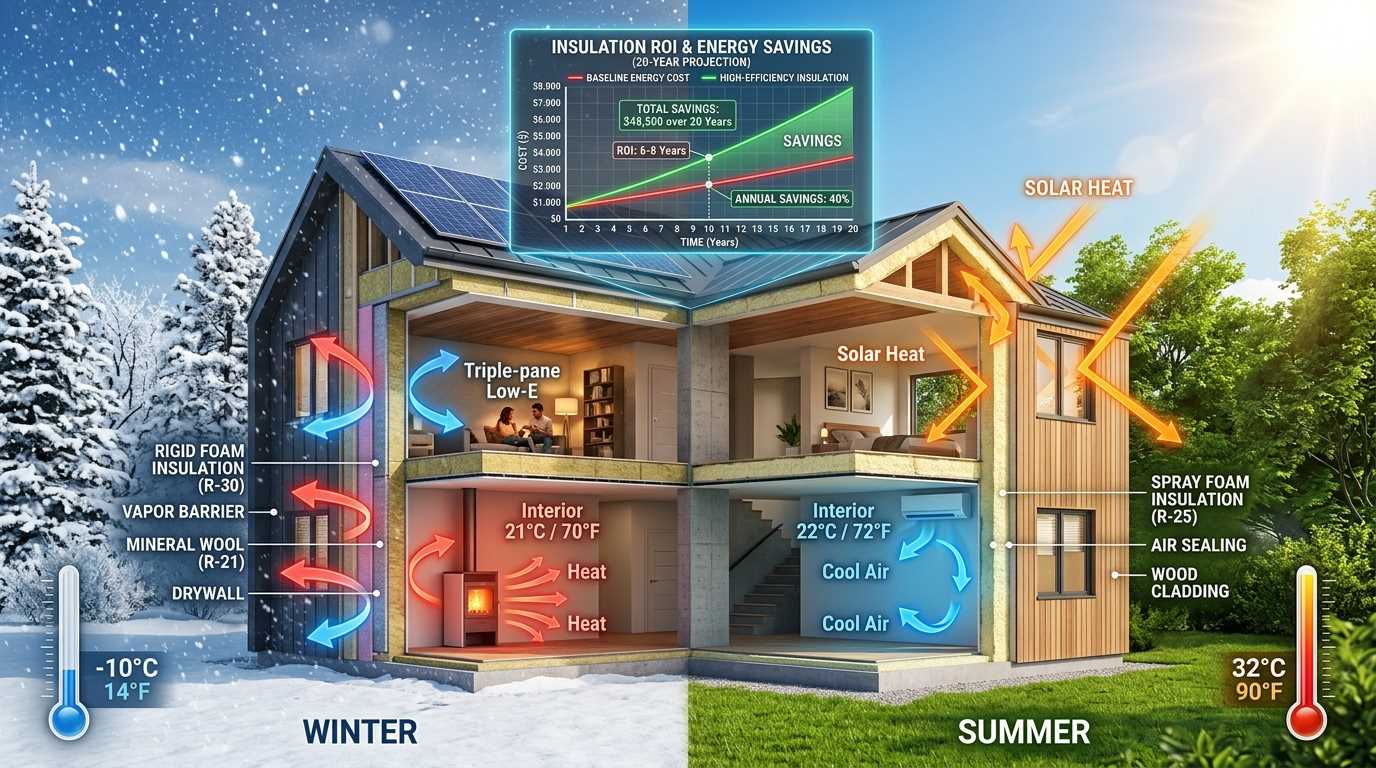
- Weatherstripping and caulking ($30-$80). Sealing gaps around windows and doors reduces air infiltration by 10-20%. In older homes, I've seen this cut heating bills by $100-$200/year. Use a candle test: hold a lit candle near window frames on a windy day. If the flame flickers, you have a leak.
- Low-flow showerheads ($15-$40 each). Reduce hot water usage without noticeably affecting pressure. A family of four saves $70-$120/year on water heating. The Niagara Stealth and High Sierra are top performers in my testing.
Long-Term Investments That Pay Off
These are bigger commitments, but the returns are substantial over 5-15 years:
- Attic insulation upgrade ($1,500-$3,500). If your attic insulation is below R-38 (about 12 inches of fiberglass), adding more can reduce heating and cooling costs by 15-25%. Payback: 3-6 years depending on your climate.
- HVAC system replacement ($5,000-$12,000). If your system is over 15 years old and has a SEER rating below 14, upgrading to a SEER 18+ system cuts cooling costs by 25-35%. With federal tax credits covering up to $2,000, the effective payback is 7-10 years.
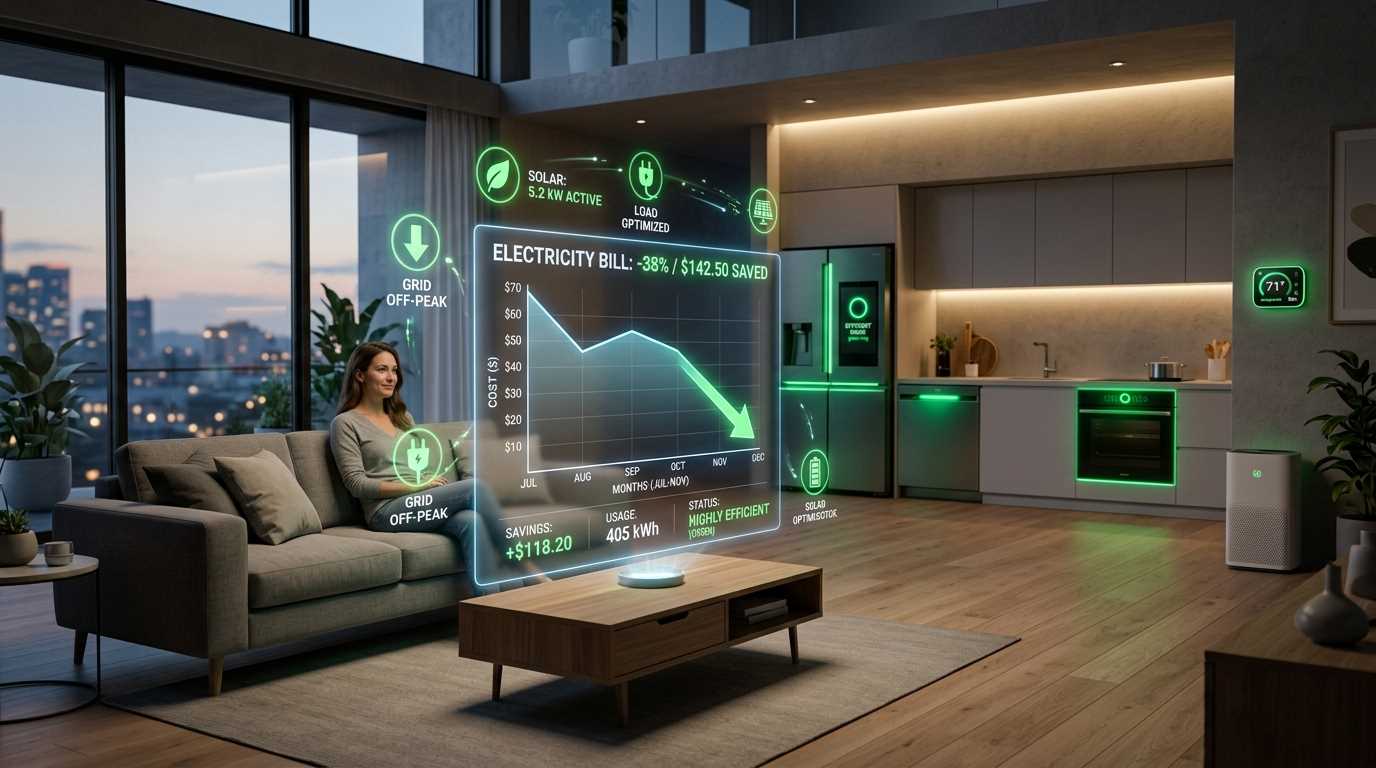
- Solar panels ($15,000-$25,000 after tax credits). The ultimate energy investment. A properly sized system eliminates 70-100% of your electricity bill. Payback: 6-10 years in most states. Over 25 years, total savings range from $30,000 to $80,000. Learn how to size your system in my home energy usage guide.
- Heat pump water heater ($1,500-$3,000). Uses 60% less energy than a standard electric water heater. The federal tax credit covers 30% up to $2,000. Annual savings: $250-$450. Payback: 4-7 years.
🔧 Pro Tip
- Don't tackle long-term investments until you've done the quick wins and medium-term upgrades first. It makes no sense to buy a bigger solar system to offset energy waste that costs $50 to fix.
- Always check for rebates before buying. The Database of State Incentives for Renewables and Efficiency (DSIRE) lists every available incentive by zip code.
Setting Up Your Personal Energy Dashboard
The people who sustain energy savings over years — not just weeks — all have one thing in common: they track their numbers regularly. You don't need fancy software. Here's the simplest system that works:
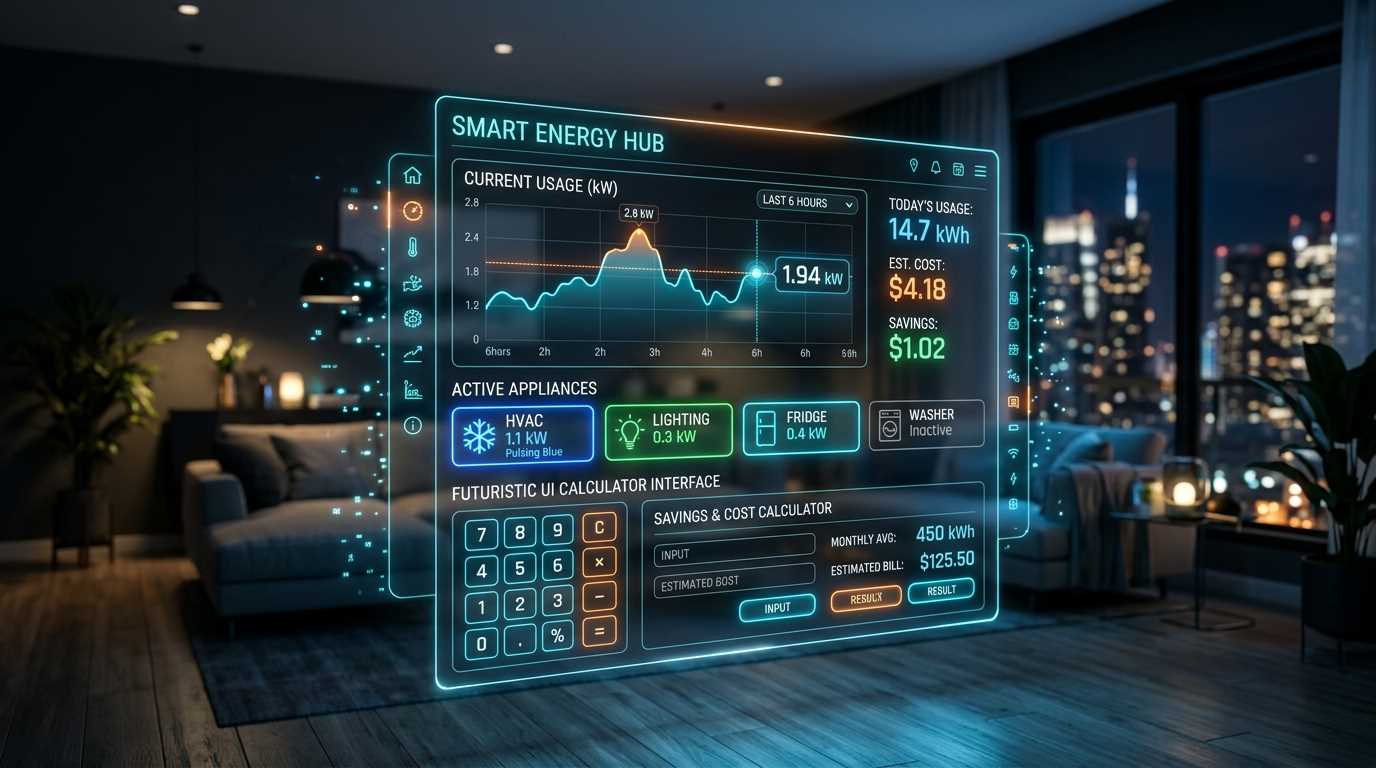
Create a single spreadsheet or use our energy savings calculator monthly. Track these columns: date, total kWh, total cost, cost per kWh, outdoor average temperature, and notes (any unusual usage, guests, changes). After three months, patterns emerge. After six months, you can predict your bills within $10-15. After a year, you'll know exactly which months to expect spikes and can plan accordingly.
The dashboard approach transforms your relationship with energy from reactive (getting a bill and being surprised) to proactive (knowing your bill before it arrives and understanding exactly why).
I keep telling people the same thing: the calculator doesn't save you money. Using the calculator saves you money. The difference between someone who runs a calculator once and someone who uses it monthly is typically $500-$1,000 per year in additional savings. The monthly check-in catches problems early — a creeping usage increase, a rate change you didn't notice, an appliance starting to fail — before they cost you hundreds.