The Honest Truth About EV Ownership
I bought my first electric vehicle — a Tesla Model 3 Long Range — in late 2023. At the time, I was skeptical. I'd spent my entire adult life driving petrol cars and genuinely enjoyed the experience of filling up, the sound of a well-tuned engine, the familiarity of knowing exactly where every gas station was on my commute. Switching to electric felt like giving something up.
Three years and 48,000 miles later, I can say with complete confidence that I will never go back to a petrol car. But here's the thing: my reasons aren't what you'd expect from an EV evangelist. I don't primarily drive electric because of environmental concerns (though those matter to me). I don't do it because I love technology. I do it because it saves me money — a lot of money — and the day-to-day experience is genuinely better in ways I never anticipated.
But it's not all perfect. There are real trade-offs, genuine frustrations, and costs that EV salespeople won't mention. This guide covers all of it — the good, the bad, and the genuinely surprising.
💡 Key Insight
EV sales crossed 10 million units globally in 2025, representing 18% of all new car sales. In the US, EVs accounted for 12% of new vehicle sales in Q4 2025, up from 7.6% in 2023. The market is growing fast — but growing pains remain.
Who Actually Benefits Most from Going Electric
Not everyone should buy an EV right now. After talking to dozens of EV owners and analyzing the data, I've identified the profiles where an EV absolutely makes financial sense:
High-Mileage Drivers (15,000+ Miles/Year)
The more you drive, the more the EV fuel savings compound. At 20,000 miles per year, my annual energy costs are around $900-$1,100. The petrol equivalent would cost $2,100-$3,000 depending on fuel prices. That's $1,200-$1,900 in annual savings, which pays down the EV price premium quickly. If you're a road warrior, the EV math is almost always compelling.
Home Charging Owners
This is the single most important factor. If you can install a Level 2 charger in your garage or driveway (costing $500-$1,500), you unlock the full EV savings story. Home charging at off-peak rates is by far the cheapest way to fuel a car. If you rely entirely on public charging, the economics get much tighter and the convenience drops significantly.
High Fuel Price Regions
If you live in California, the Northeast, Hawaii, or any area where petrol consistently costs $4.00+/gallon, the EV fuel savings are dramatically amplified. A California EV owner saves roughly 2-3x more on fuel than someone in Texas or Louisiana where petrol can dip below $2.75/gallon. The regional difference is massive.
Daily Commuters
EVs are at their best on predictable, repeatable routes. You learn exactly how much energy your commute uses, you can precondition the cabin while plugged in, and you never waste fuel idling in traffic. My daily 45-mile round-trip commute costs me about $1.80 in electricity. The same commute in my old petrol car cost $6.50-$8.00 in fuel.
The Hidden Costs Nobody Tells You About
Every EV guide talks about fuel savings and low maintenance. Let me talk about the costs that surprised me — the ones that eat into those savings:
Home Charger Installation: $500-$1,500
You can charge from a standard 120V outlet, but it adds only 3-5 miles of range per hour. Most EV owners install a 240V Level 2 charger, which adds 25-40 miles per hour and fully charges overnight. The charger unit costs $300-$700, and professional installation adds $300-$800 depending on your electrical panel. See our complete home charging setup guide for detailed installation costs and permitting requirements.
Tire Replacement: $200-$400 Extra Per Set
EVs need EV-specific tires designed to handle the extra weight (batteries add 800-1,200 lbs) and instant torque. These cost 15-30% more than standard tires. A set of EV-specific tires for a Model 3 costs about $1,100 installed, versus roughly $800 for a petrol car. They also wear 20-30% faster. I replaced my front tires at 28,000 miles.
Electricity Rate Increases
My electricity rate climbed from $0.13/kWh to $0.17/kWh over three years — a 30% increase in charging costs. While petrol prices fluctuate, electricity rates tend to climb steadily. Some utilities are introducing EV-specific rate tiers that charge more for high-usage households, which could erode savings for heavy drivers.
Higher Registration Fees
Because EV owners don't pay petrol taxes, many states have introduced additional EV registration fees ranging from $50/year in Colorado to $200/year in Georgia. Check your state's specific EV fees before buying.
Range Anxiety: Still a Thing in 2026?
Let me address the most common concern head-on. Range anxiety was real when I bought my EV in 2023. On my first road trip, I planned my charging stops for two weeks in advance and was genuinely nervous. I needn't have worried — the trip was seamless, and I arrived with 18% battery remaining.
Here's where things stand in 2026:
- Average new EV range: 280-350 miles (EPA). The cheapest EVs start at 200+ miles.
- My real-world range: About 15-20% below EPA in highway driving. In city driving, I actually exceed EPA estimates due to regenerative braking.
- Cold weather impact: Below 20 — F, expect 25-35% range reduction from battery chemistry and cabin heating demands. In Texas this rarely affects me, but friends in Minnesota say it's a serious winter consideration.
For daily driving, range anxiety is dead. For road trips, the charging network is good enough that I haven't been stranded once in three years. But if you regularly drive 400+ miles through rural areas with sparse charging, plan carefully — or stick with petrol/hybrid. You can check real-world range data for any vehicle at fueleconomy.gov.
"Range anxiety in 2026 is more about charging speed and availability than actual range. The question isn't 'can I make it there?' — it's 'will the charger work when I arrive?'" — EV road trip enthusiast, r/electricvehicles
Charging Infrastructure Reality Check
The charging experience varies enormously depending on which network you use. Let me be brutally honest about each:
Tesla Supercharger Network: Still the Gold Standard
As of early 2026, Tesla operates over 2,200 Supercharger stations in the US with 25,000+ stalls. Reliability is consistently above 99.5%. The chargers are fast (250 kW peak), well-positioned near amenities, and billing is automatic. This is the biggest reason I chose Tesla, and it remains their competitive advantage.
Non-Tesla Networks: Improving but Inconsistent
Electrify America, EVgo, and ChargePoint operate the charging infrastructure for non-Tesla EVs. When chargers work, they work well — Electrify America's 350 kW chargers can add 200 miles of range in 15 minutes. But the reliability rate hovers around 85-90%, meaning 1 in 10 sessions encounters a problem. The NEVI program has been pouring $5 billion into charging reliability standards, and newer stations are more reliable, but there's still a long way to go.
Destination Charging: The Unsung Hero
Hotels, restaurants, and shopping centers with Level 2 chargers are the most underrated charging resource. Over 15,000 locations in the US as of 2026 offer destination charging. Charge while you eat or sleep, and you barely notice the charging time.
Resale Value: How EVs Hold Up
The used EV market went through a painful correction in 2023-2024 when Tesla's price cuts dragged down every used EV's value. But the bleeding has stopped. In 2025-2026, used EV prices have stabilized and are following depreciation curves much closer to their petrol equivalents.
My Model 3 has lost approximately 4% of its original battery capacity after 48,000 miles and 3 years — right in line with industry expectations. The battery still delivers 298 miles of EPA range instead of 310, which is barely noticeable. If this degradation rate holds, battery longevity shouldn't be a major resale concern for modern EVs.
One positive trend: EVs with well-documented charging histories (mostly home charging, occasional fast charging) are commanding premium prices in the used market. Buyers understand that frequent DC fast charging accelerates battery wear.
Environmental Impact vs Wallet Impact
Let's separate the two motivations because they don't always align perfectly.
Environmental case for EVs in 2026: Even when charged from the current US grid mix (which is about 60% fossil fuels), an EV produces roughly 50-60% less CO2 over its lifetime than a comparable petrol car, according to EPA data. That gap widens rapidly as the grid gets cleaner — and it is getting cleaner. The US grid's carbon intensity has dropped 20% since 2015, and the trend is accelerating. If you charge from solar panels at home (like I do), the lifetime emissions drop by another 80-90%. The environmental case for EVs has never been stronger.
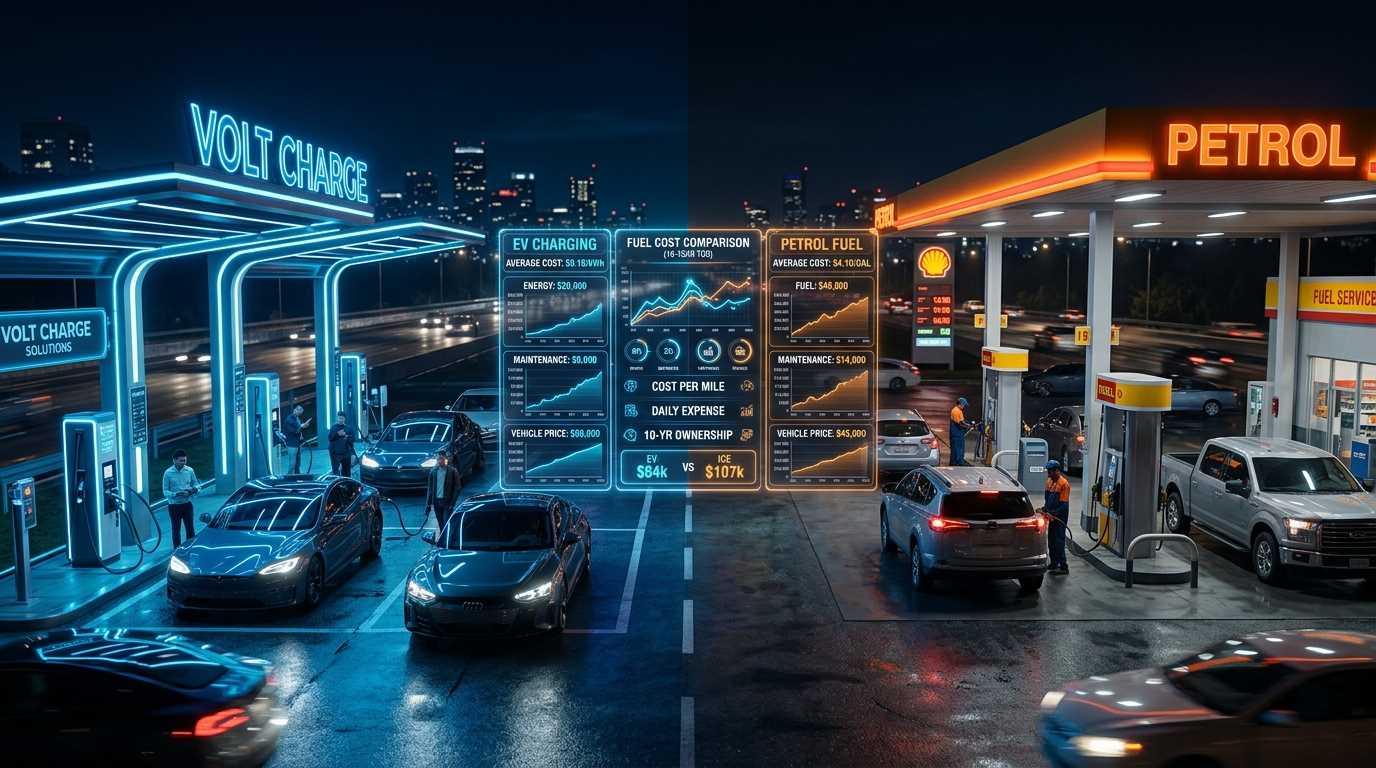
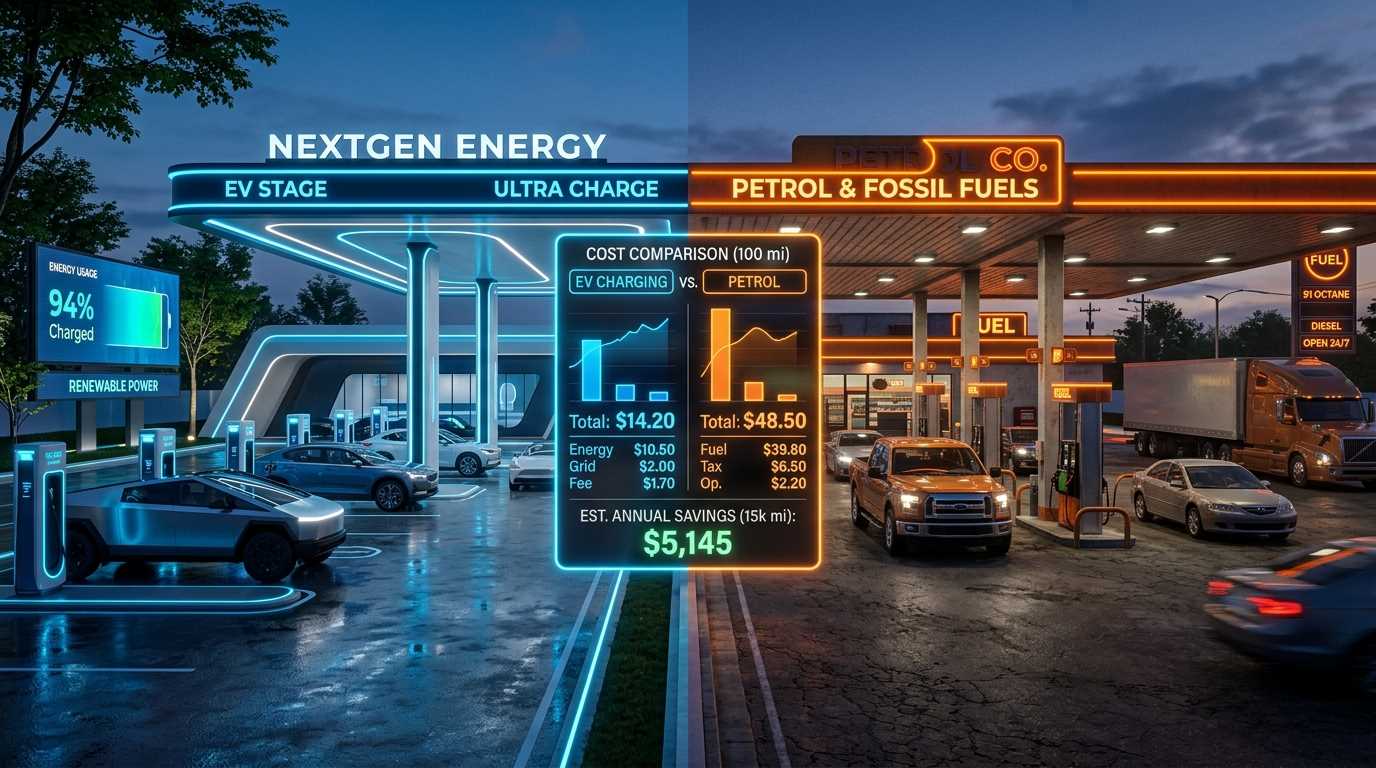
Financial case for EVs in 2026: As my detailed cost comparison showed, an EV saves $1,500-$2,000 per year for a typical driver — provided you can charge at home and drive at least 12,000 miles annually. The payback period on the price premium is typically 3-5 years, after which every year of ownership is pure savings compared to petrol.
Where these two cases don't align: buying a brand-new EV has a higher upfront environmental cost due to battery manufacturing. If your primary concern is minimizing environmental impact and you're on a tight budget, keeping your existing petrol car for a few more years and then switching to a used EV is actually the most environmentally and financially responsible choice.
🔧 Pro Tip
- If you're considering an EV primarily for environmental reasons, look at the used EV market first. A 3-year-old EV has already absorbed its manufacturing carbon debt, and the $4,000 federal used EV credit makes it even more affordable.
- Pair your EV with a home solar installation and you've essentially eliminated your transportation carbon footprint. The combined savings (solar + EV vs. petrol + grid electricity) can exceed $3,000-$4,000 per year.
My Verdict After 3 Years of EV Ownership
Here's my honest, unvarnished conclusion after 48,000 miles and three years:
Buying an EV was the best vehicle-related financial decision I've ever made. I've saved approximately $5,400 total over three years compared to what my previous petrol car would have cost — and that's after accounting for the higher insurance, tire costs, and home charger installation. My per-mile cost has been about $0.11 versus $0.22 for my old petrol car. That's half the cost per mile.
Beyond the money, the daily experience is genuinely better. I start every morning with a full "tank." I never visit a gas station. The acceleration is smoother and quieter. Preconditioning the cabin while plugged in means I get into a perfectly temperature-controlled car every morning. I can't imagine going back.
But I'm realistic about who should and shouldn't buy one. If you live in an apartment without charging access, drive long distances through rural areas regularly, or can't afford the upfront price premium even with incentives — an EV probably isn't your best move yet. Give it another 2-3 years. The charging infrastructure is improving, prices are falling, and the used EV market is maturing rapidly.
For everyone else — especially homeowners who can install a charger and drive 12,000+ miles per year — buying an EV in 2026 makes genuine financial sense. Run the numbers for your specific situation using our EV TCO Calculator below. That's the only way to know if the math works for you.