
EV
EV vs Petrol Cost Comparison Full Guide 2026
The definitive comparison of electric vs gasoline vehicle costs. Fuel, maintenance, insurance — we cover every expense category.
Everything about EV ownership: costs, charging, savings, and real-world driving. Data-driven analysis.
The question isn't whether electric vehicles are the future — they already are. The real question is whether an EV makes financial sense for your specific driving patterns, electricity rates, and charging situation. The answer is more nuanced than most dealership salespeople will tell you, and far more interesting than a simple "EVs save money" headline.
Our EV category cuts through the noise with actual ownership cost data. We calculate fuel-equivalent costs using real-time electricity rates from major utilities across different regions, factoring in time-of-use pricing, off-peak charging advantages, and public DC fast charging premiums. We model insurance cost differences between EV and petrol equivalents, depreciation curves for popular models like the Tesla Model 3, Hyundai Ioniq 5, and Ford F-150 Lightning, and maintenance cost comparisons that show where EVs truly shine — fewer moving parts means fewer things that break.
We also cover the practical side of EV ownership: home charger installation costs (Level 2, 240V), the real-world impact of cold weather on battery range, federal tax credit eligibility under the updated IRS Section 30D rules, and whether workplace charging is available in your area. Our total cost of ownership models run 5-year projections so you can see exactly when — and if — the higher purchase price of an EV pays for itself through lower operating costs.
Start with our EV vs Petrol comparison if you're on the fence, or read our charging cost breakdown to understand the day-to-day economics of electric driving.
The definitive comparison of electric vs gasoline vehicle costs. Fuel, maintenance, insurance — we cover every expense category.

An honest, data-driven analysis of EV ownership costs vs traditional vehicles. The answer might surprise you.
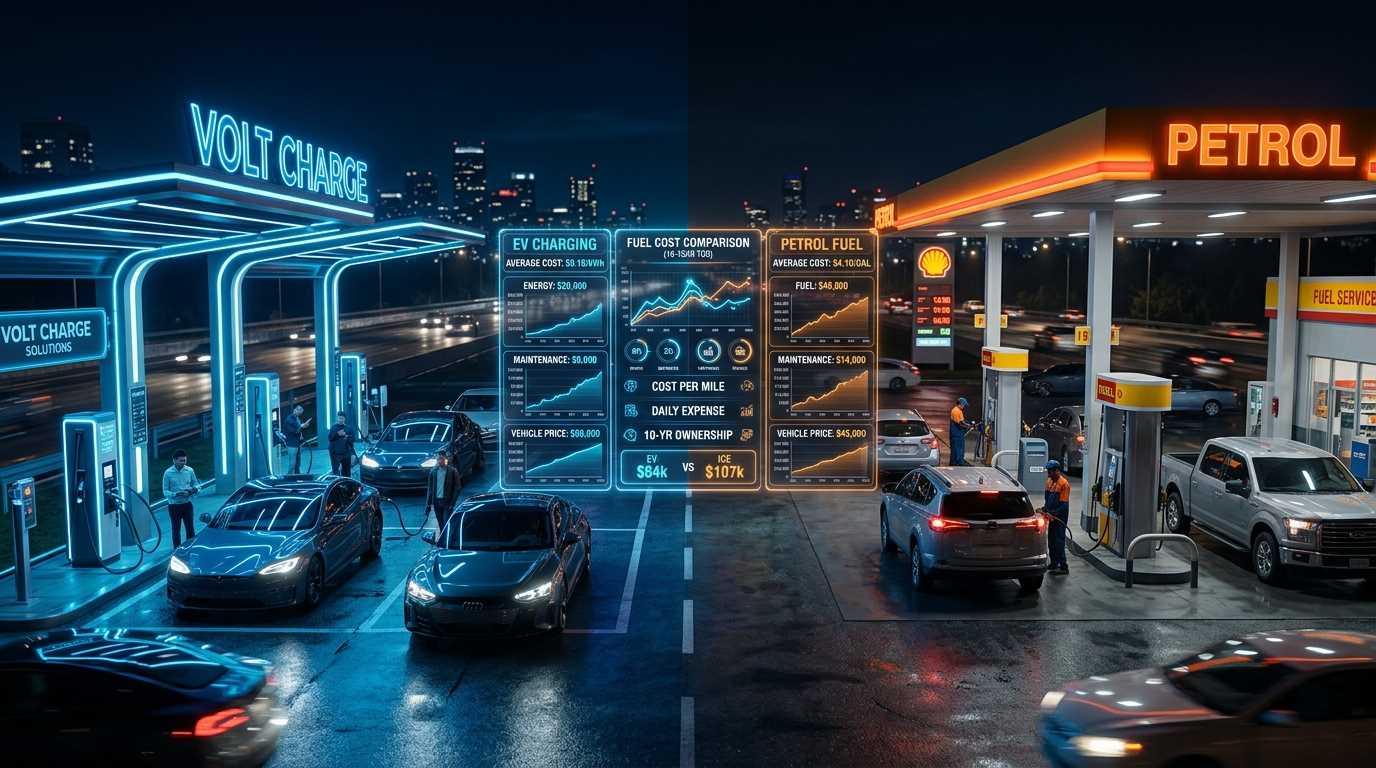
Home charging, public stations, fast chargers — we break down every EV charging scenario and compare it to petrol costs.
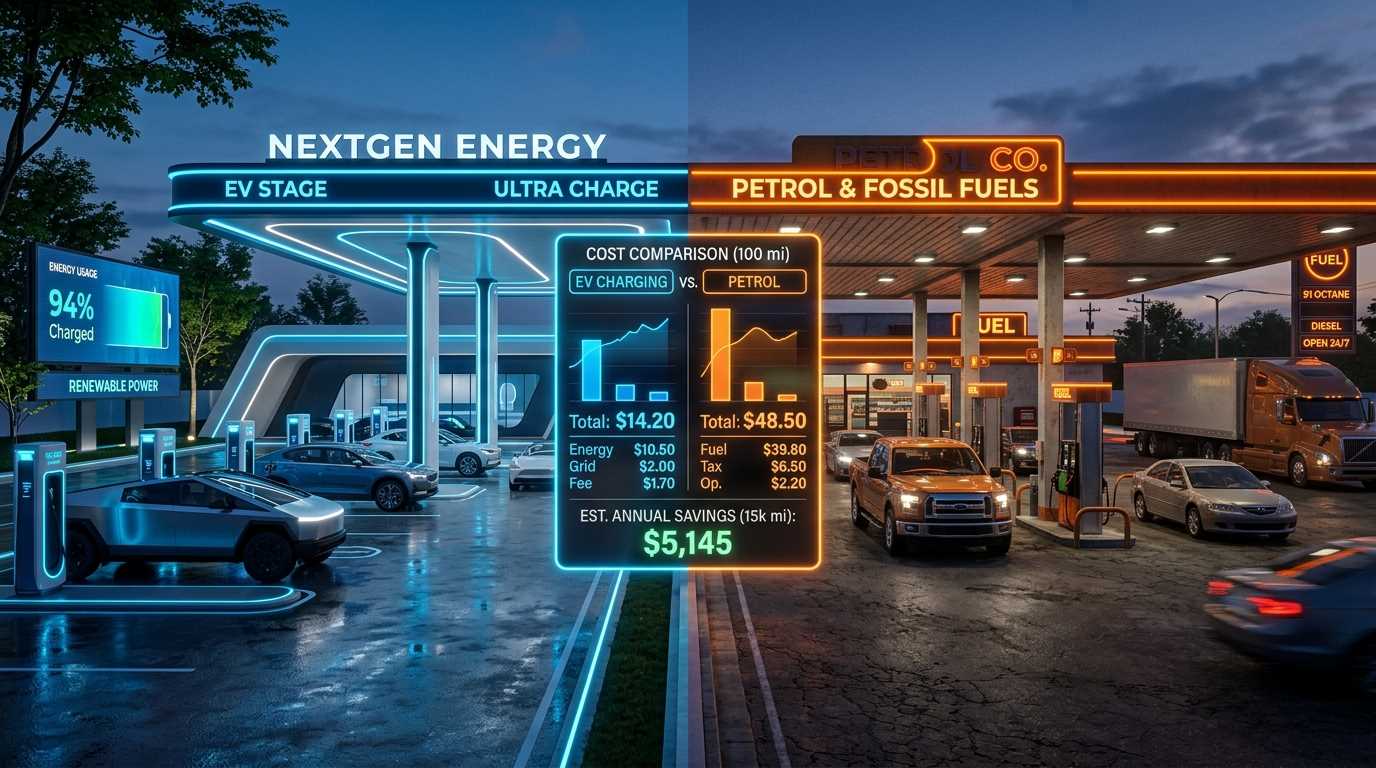
Purchase price is just the beginning. We calculate the complete 5-year cost of owning an electric vehicle.
The transition to electric vehicles is accelerating faster than most people realize. EV sales grew 35% year-over-year globally in 2025, and with falling battery costs — down 90% since 2010 to approximately $115/kWh in 2026 — EVs are approaching price parity with petrol vehicles. Our EV guides, created by the Green RoiLab content team, draw on analysis of market data from DOE's Vehicle Technologies Office and the IEA's Global EV Outlook.
Each article in this collection addresses a specific aspect of EV ownership: the real cost comparison with petrol vehicles, total cost of ownership over 5 years, charging infrastructure economics, and whether an EV makes financial sense for your specific driving patterns. Use our EV vs Petrol Cost Calculator to run your own numbers based on local fuel and electricity prices.
The economics of EV ownership vary dramatically by driving habits and location. An EV driver in California paying $0.30/kWh for electricity and commuting 50 miles daily saves approximately $1,200/year in fuel costs compared to a petrol car at $4.50/gallon. Add in the federal tax credit of up to $7,500, reduced maintenance (no oil changes, fewer brake replacements), and lower fuel costs, and the total 5-year cost of ownership for many EV models now undercuts comparable petrol vehicles. Our EV vs Petrol Cost Calculator lets you run your own numbers using local fuel and electricity prices.
175:Our goal with these guides is to cut through both the EV hype and the FUD (fear, uncertainty, doubt). Electric vehicles are not perfect for everyone yet — range anxiety is real for apartment dwellers without home charging, and upfront costs remain higher than equivalent petrol models in most segments. But for millions of drivers with home charging access, EVs already deliver significant financial and environmental advantages. These guides will help you determine whether an EV makes sense for your specific situation, budget, and lifestyle.