The LED Revolution by Numbers
LED bulbs have completed their takeover of the lighting market, and the numbers are staggering. In 2026, LEDs account for over 75% of all lightbulb sales in the US per DOE data, up from just 4% in 2013. The average price of a standard 800-lumen LED bulb has fallen to $1.50-$3.00 at big-box stores, down from $30-50 when they first hit the market.
But despite this progress, I still walk into homes with 10-20 incandescent or CFL bulbs. In some cases, these are specialty bulbs (vintage Edison-style, appliance bulbs) where LED options are limited. More often, it's simply inertia — nobody's gotten around to changing them.
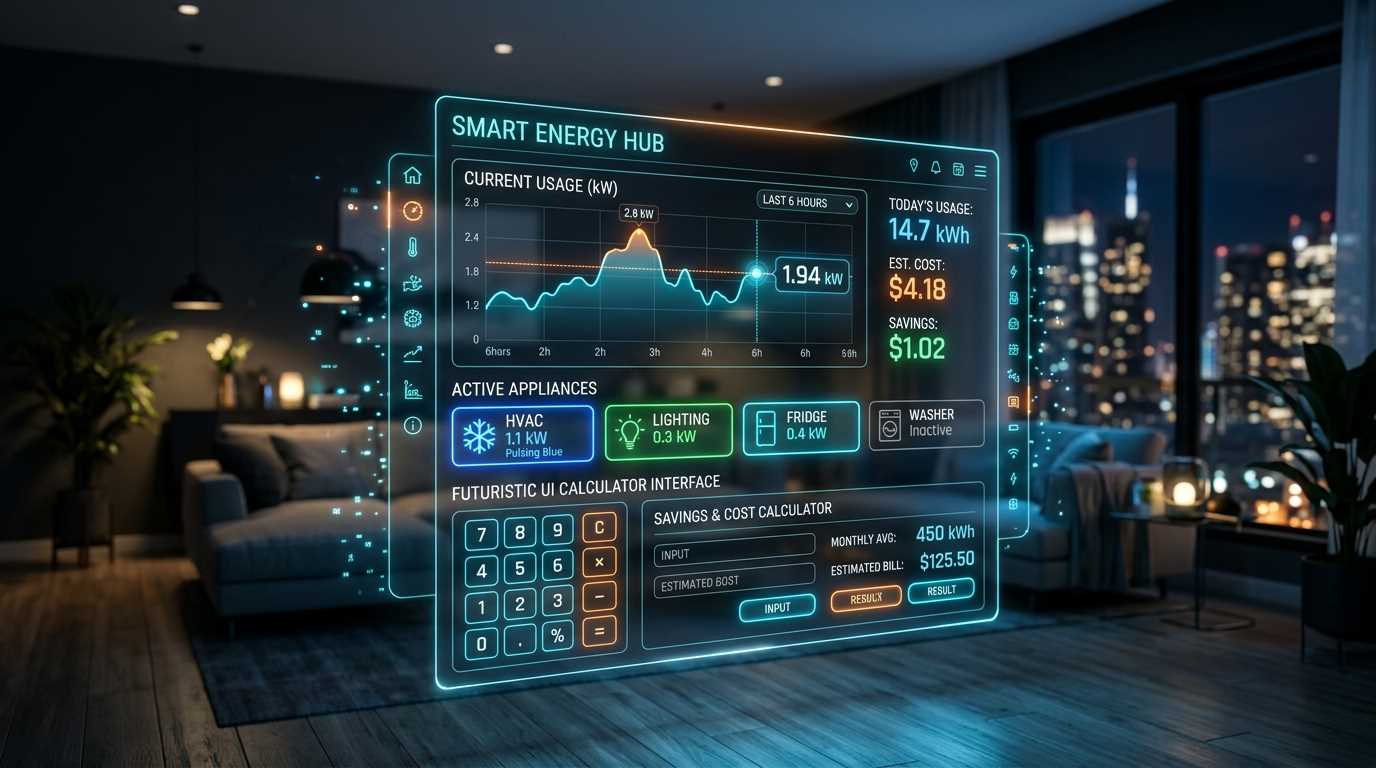
Here's why that matters in 2026: electricity rates have climbed to an average of $0.172/kWh. Every watt of incandescent lighting now costs more to run than ever before. The savings from switching to LED have actually increased over time because electricity has gotten more expensive while LEDs have gotten cheaper.
💡 Key Insight
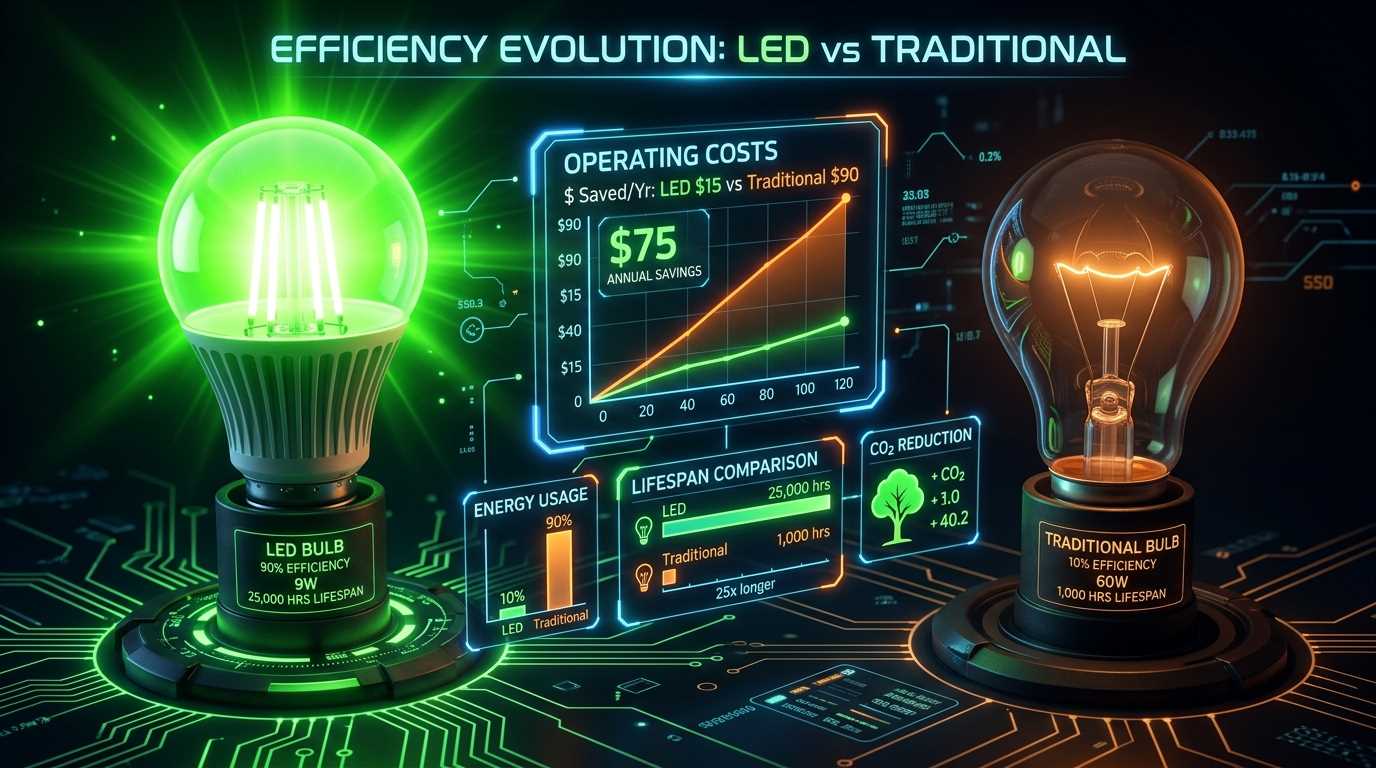
An incandescent bulb converts only about 10% of its energy into visible light — the other 90% becomes heat. LEDs convert about 40-50% into light (DOE). That means for the same brightness, an LED uses 75-85% less electricity. A 60W incandescent equivalent LED draws just 8-10 watts.
Cost Per Bulb vs Lifetime Savings
Let's compare the total cost of ownership for a standard A19 bulb (the classic household bulb shape) used 3 hours per day over 10 years. I'm using 2026 retail pricing and $0.172/kWh:
- 60W incandescent: Bulb cost: $1.00. Lifespan: ~1,000 hours (replaced 11 times in 10 years). Total bulb cost: $11.00. Energy cost: 60W — 3 hrs — 365 days — 10 years — 1,000 — $0.172 = $113.06. Total: $124.06.
- 14W CFL: Bulb cost: $3.00. Lifespan: ~8,000 hours (replaced once in 10 years). Total bulb cost: $6.00. Energy cost: 14W — 3 hrs — 365 — 10 — 1,000 — $0.172 = $26.38. Total: $32.38.
- 9W LED (quality brand): Bulb cost: $3.00. Lifespan: 25,000+ hours (one bulb lasts 22+ years at 3 hrs/day). Total bulb cost: $3.00. Energy cost: 9W — 3 — 365 — 10 — 1,000 — $0.172 = $16.97. Total: $19.97.
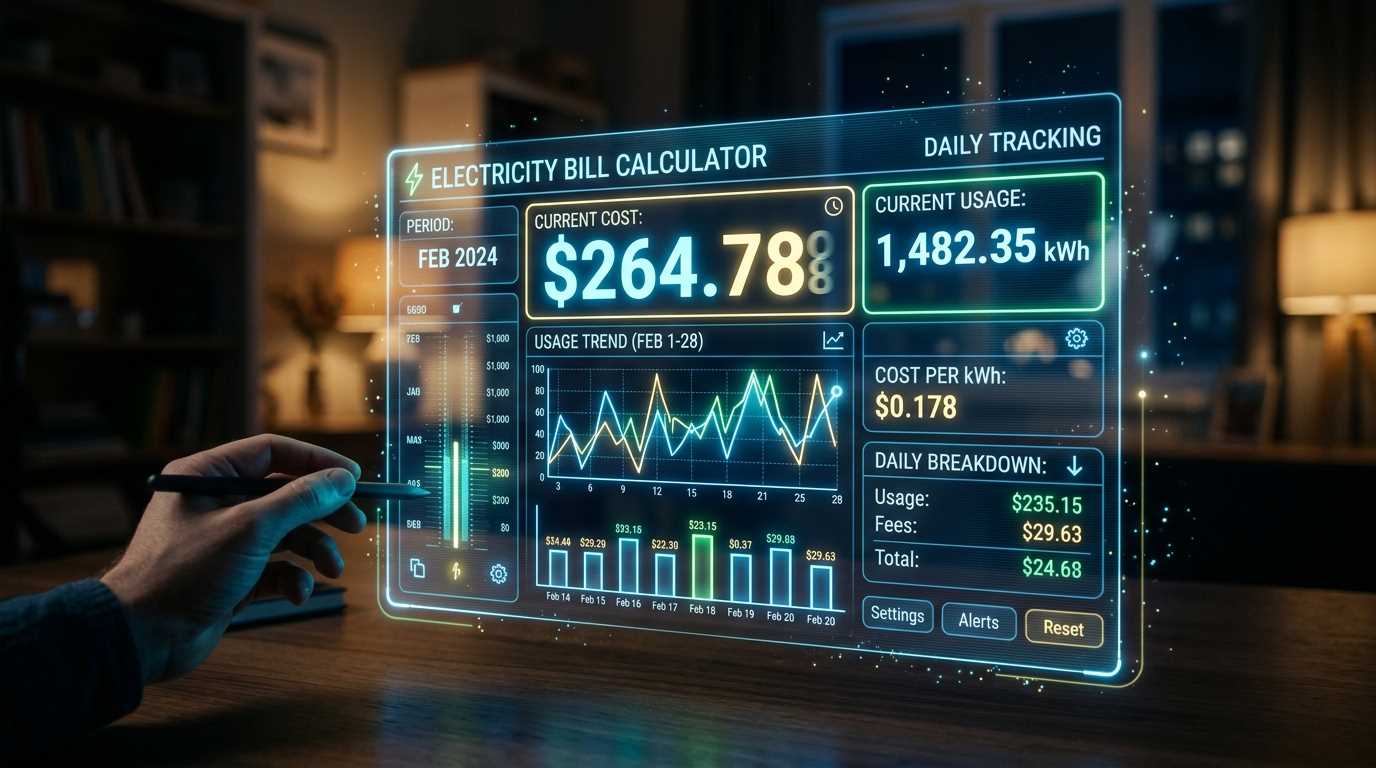
Per bulb, switching from incandescent to LED saves $104.09 over 10 years. That's $10.41 per year per bulb. If your home has 40 bulbs (the average), that's $416 per year in total savings from lighting alone. You can calculate your exact lighting costs with an appliance energy cost calculator.
Energy Usage Comparison (Real Watts)
Here's the actual wattage comparison for common bulb equivalents, measured with a watt meter in 2026:
- 40W equivalent: Incandescent 40W | CFL 9W | LED 5-6W
- 60W equivalent: Incandescent 60W | CFL 13-14W | LED 8-10W
- 75W equivalent: Incandescent 75W | CFL 18-20W | LED 11-13W
- 100W equivalent: Incandescent 100W | CFL 23-26W | LED 14-16W
- 150W equivalent: Incandescent 150W | CFL 32-38W | LED 20-24W
Notice the LED wattages continue to improve. In 2020, a 60W-equivalent LED used 10-12W. In 2026, the best models use 8W for the same light output. That efficiency improvement compounds across your entire home.
For flood lights, recessed lighting (can lights), and three-way bulbs, the savings are even more dramatic because these tend to be higher-wattage fixtures. A 65W BR30 flood light replaced with a 9W LED flood saves 56 watts per bulb. If you have 8 recessed lights running 4 hours a day, that's 56W — 8 — 4 — 365 — 1,000 — $0.172 = $112.32/year.
Heat Output: The Hidden Cost of Incandescents
Here's the part that almost nobody considers: incandescent bulbs are essentially small space heaters that happen to emit some light. A 60W incandescent bulb produces about 51 watts of heat. In winter, that heat is technically useful (though inefficient compared to your heating system). In summer, that heat makes your AC work harder.
Let me quantify this. If you have 20 incandescent bulbs running an average of 4 hours per day during summer (90 days), those 20 bulbs produce 20 — 51W — 4 hrs — 90 days = 367,200 watt-hours = 367 kWh of waste heat. Your AC has to remove that heat. At a typical AC COP of 3.0, removing that heat costs an additional 367 — 3.0 — $0.172 = $21.04 in extra cooling costs.
Switch those 20 bulbs to LED (producing only about 3W of heat each) and the waste heat drops to 20 — 3W — 4 — 90 = 21.6 kWh. The AC cost to remove that heat: $1.24. So you save $21.04 - $1.24 = $19.80/year just in reduced AC load from heat reduction. Add this to the direct lighting savings and the numbers get even better.
"Incandescent bulbs are the most inefficient technology commonly used in homes. They're heat engines that happen to produce light. LEDs are light engines that happen to produce some heat. That fundamental difference is why the energy gap is so massive."
How Many Bulbs Does Your Home Have?
Most people underestimate the number of bulbs in their homes by 30-50%. Here's my checklist for a thorough count:
- Kitchen: Ceiling fixtures (2-6), under-cabinet lights (2-6), refrigerator bulb (1), oven/stove bulbs (1-2), pantry light (1). Total: 6-16 bulbs.
- Living/family room: Ceiling fixture (1-3), table lamps (2-4), floor lamps (1-2), accent/decorative lights (2-4). Total: 6-13 bulbs.
- Bedrooms: Ceiling fixture (1), bedside lamps (2), closet light (1), ceiling fan light (1). Per bedroom: 4-5. For 3 bedrooms: 12-15 bulbs.
- Bathrooms: Vanity lights (2-4 per bath), ceiling fixture (1). Per bathroom: 3-5. For 2 baths: 6-10 bulbs.
- Hallways/stairs: Ceiling fixtures (2-4). Total: 2-4 bulbs.
- Garage/basement: Ceiling fixtures (2-4), utility lights (1-2). Total: 3-6 bulbs.
- Outdoor: Porch lights (2), path lights (4-8), flood/security lights (2-4), garage exterior (1). Total: 9-15 bulbs.
Total for a typical 3-bedroom, 2-bath home: 44-69 bulbs. That's a lot of savings opportunity if even half are still incandescent or CFL.
What About Specialty Bulbs?
Not every bulb in your home is a standard A19 shape. Here's how specialty bulbs compare:
- BR30/R30 recessed flood lights: 65W incandescent equivalent uses 65W. LED equivalent: 9-11W. Savings per bulb: $42-52/year at 4 hours daily. Most homes have 4-12 of these. Total savings: $170-$620/year. Try our LED savings calculator for your exact numbers.
- PAR38 outdoor flood lights: 90W incandescent equivalent uses 90W. LED equivalent: 12-14W. Savings per bulb: $50-60/year at 6 hours nightly. Homes with 4-8 security floods save $200-$480/year.
- Candelabra (E12 base) chandelier bulbs: 40W incandescent uses 40W. LED equivalent: 4-5W. Savings per bulb: $18-22/year at 4 hours daily. A chandelier with 8 bulbs saves $145-$175/year.
- Appliance bulbs (refrigerator, oven): 15-25W incandescent. LED equivalent: 2-3W. Minimal annual savings ($3-8/bulb) because they run only when the door is open, but LEDs handle the temperature extremes better and last much longer.
- Three-way bulbs: 50/100/150W incandescent. LED three-way: 6/12/18W. Savings: $25-40/year per bulb at 4 hours daily. These are commonly found in floor lamps.
The Switch-Out Priority List
You don't need to replace every bulb at once. Here's the order that maximizes your savings per dollar spent:
- Frequently used high-wattage bulbs first. Any bulb that's 75W or 100W equivalent and used 3+ hours per day. These are usually living room floor lamps, kitchen ceiling fixtures, and reading lamps. Each one saves $15-$25/year.
- Bulbs in enclosed fixtures. Incandescent bulbs in enclosed fixtures (like bathroom vanity covers) trap heat, shortening their lifespan to just 500-700 hours. LEDs handle enclosed fixtures well (check the packaging for "suitable for enclosed fixtures") and last 10x longer. Double savings from energy plus reduced replacement frequency.
- Outdoor and hard-to-reach bulbs. Every time you need a ladder to change a bulb, the convenience value of a 25,000-hour LED is enormous. Security lights, high ceiling fixtures, and exterior flood lights should all be LED.
- Bulbs in rooms you use most. Kitchen, living room, and family room bulbs that run 4-6 hours per day. The more hours, the faster the payback.
- Everything else. Closet bulbs, guest room bulbs, and decorative lights that run 30 minutes per day can wait. The savings per bulb are small ($2-$5/year) because of low usage hours.
Quality Matters: Cheap vs Premium LEDs
Not all LED bulbs are equal, and this matters more for long-term savings than most people realize. Here's what I've found testing budget ($1-2) vs. premium ($4-8) LED bulbs:
- Lifespan claims: Budget bulbs claim 15,000 hours. Premium bulbs claim 25,000-50,000 hours. In real-world testing, budget bulbs average 12,000-15,000 hours while premium bulbs consistently hit 25,000+. The premium bulb lasts 70-100% longer.
- Color quality (CRI): Budget LEDs typically have a CRI of 80. Premium LEDs reach 90-95. CRI measures how accurately colors appear under the light. A CRI of 90+ makes your home look noticeably better — food looks more appetizing, skin tones look natural, artwork looks right. This doesn't save electricity, but it affects whether you actually like the light enough to keep the bulb.
- Dimming performance: Many budget LEDs flicker or buzz on dimmer switches. Premium LEDs (specifically labeled as "dimmable") work smoothly with most dimmers. If you're replacing dimmed bulbs, spend the extra $2.
- Warranty: Budget bulbs: usually no warranty. Premium bulbs: 3-10 year warranty. A Cree LED with a 10-year warranty that fails in year 7 gets replaced free. That's real money.
My recommendation: use premium LEDs (Philips, Cree, GE Reveal) in your most-used fixtures and anywhere you'll notice quality differences (kitchen, living room, dining room). Use budget LEDs (store brands, Feit Electric) in closets, garages, and other utility spaces where color quality doesn't matter. For a broader view of home energy upgrades, see my guide on reducing energy bills with calculators.
🔧 Pro Tip
- Look for the ENERGY STAR label on LED bulbs. ENERGY STAR certified LEDs are tested for lifespan, color quality, and dimming performance. Non-certified bulbs may not meet their stated specifications.
- Buy LED bulbs in multi-packs during sales. Costco and Amazon frequently offer 12-packs of quality LEDs for $12-18 (about $1-1.50 per bulb). That price makes the ROI even faster.
Total Household Savings Calculation
Let's put it all together with a realistic scenario. A 2,000 sq ft home with 50 bulbs, 25 of which are still 60W incandescents averaging 3 hours per day:
Direct energy savings: 25 bulbs — (60W - 9W) — 3 hrs — 365 days — 1,000 — $0.172 = 25 — 51W — 3 — 365 — 1,000 — $0.172 = $240.47/year.
Reduced replacement costs: 25 incandescent bulbs replaced ~2.7 times per year — $1.00 each = $27.50/year in bulb purchases saved (LEDs last 22+ years).
Summer AC heat reduction: approximately $12-$25/year.
Total annual savings: $280-$293.
Cost to replace all 25 bulbs with quality LEDs at $3 each: $75.
Payback period: 3.1 months.
I don't know of any other home improvement with a 3-month payback period that saves $280+ per year for over two decades. That's over $6,000 in lifetime savings from a $75 investment.