Federal Incentives That Apply to Every State
Before we dive into state-specific programs, let's establish the federal baseline that every solar installer in the United States can access. The Residential Clean Energy Credit (IRC Section 25C) — commonly called the federal solar tax credit — provides a 30% tax credit on the total cost of your solar installation, including panels, inverters, mounting hardware, and labor. This is the single most valuable solar incentive in the United States. You can model how this affects your returns using our solar ROI calculator.
For a $21,000 system, the credit is $6,300 — a dollar-for-dollar reduction in your federal tax liability. If you owe $6,000 in federal taxes, the credit eliminates your entire bill and the remaining $300 carries forward to next year. The 30% rate is locked in through 2032 under the Inflation Reduction Act, then steps down to 26% in 2033 and 22% in 2034 before expiring for residential installations. Installing sooner rather than later maximizes this benefit.
In addition to the tax credit, solar installations are exempt from federal import tariffs on solar cells under current trade policy, which keeps panel prices 10-15% below what they would otherwise be.
Top 10 States for Solar Incentives in 2026
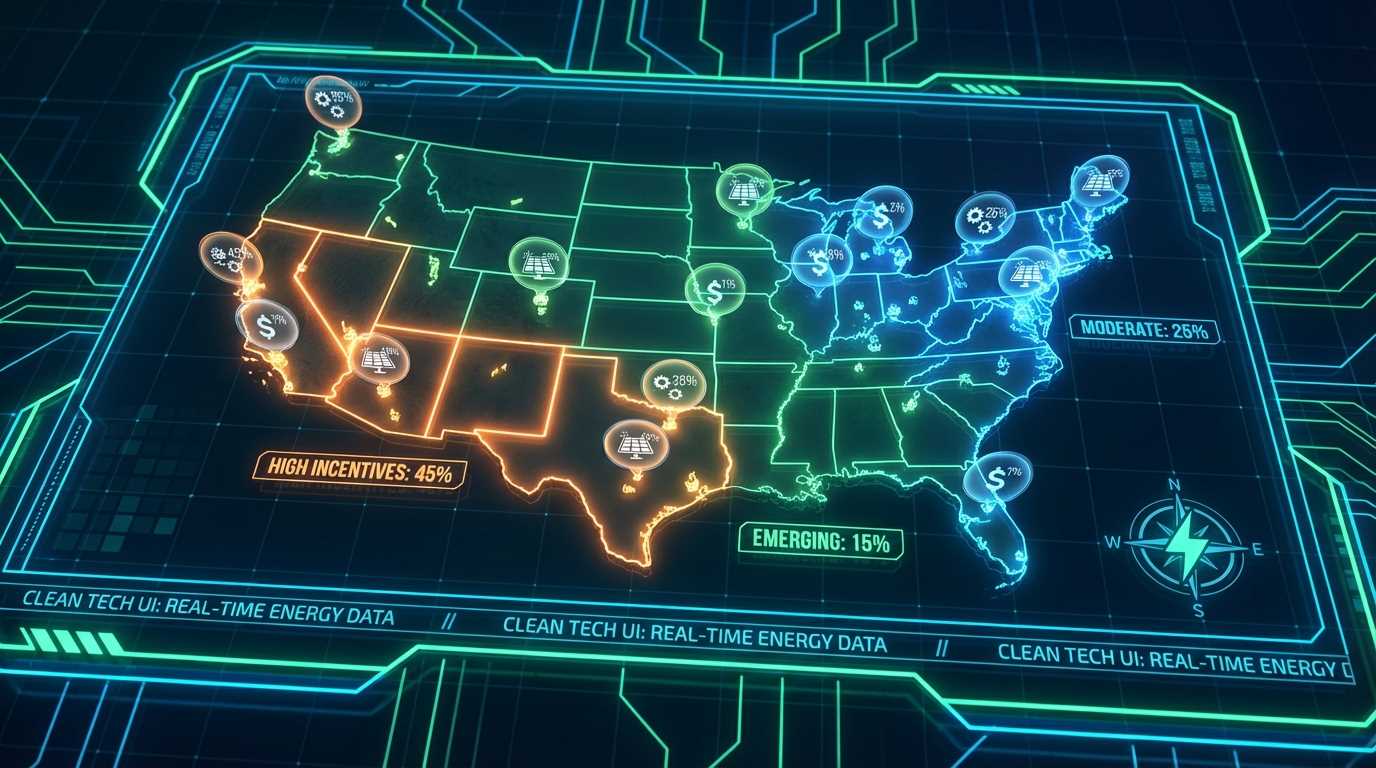
Some states stack generous programs on top of the federal credit, making solar exceptionally affordable. Here are the best states for solar economics this year, based on combined incentive value, net metering quality, and electricity rates:
1. California: Despite NEM 3.0 reducing export rates, California's Self-Generation Incentive Program (SGIP) offers up to $1,000 per kWh of battery storage capacity — up to $13,500 for a Powerwall. Combined with the federal credit and $0.30/kWh electricity rates, payback remains 7-9 years. Check my solar battery savings guide for the full picture on storage incentives.
2. New York: 25% state tax credit (up to $5,000) on top of the 30% federal credit. NY-Sun initiative provides additional per-watt rebates. Net metering at full retail rate. Effective combined incentive: 55%+ of system cost.
3. Massachusetts: The SMART program pays $0.15-$0.35/kWh for 10 years on solar production — adding $3,000-$8,000 in value beyond the federal credit. Full retail net metering. Property tax exemption for solar installations.
4. New Jersey: TRECs (Transition Renewable Energy Certificates) pay approximately $90 per SREC annually. A 7 kW system earns 7 TRECs per year = $630/year for 15 years = $9,450 total. Full retail net metering.
5. Hawaii: At $0.43/kWh (the highest in the nation), solar pays for itself in 5-6 years even without state incentives. The state's Battery Bonus Program adds $850 per kWh of storage. No net metering needed — self-consumption is the economics driver here.
6. Connecticut: Residential Solar Investment Program provides declining-block per-watt rebates. Current rate: approximately $0.30-$0.40/watt. A 7 kW system earns $2,100-$2,800 in rebates on top of the federal credit. Net metering at retail rate.
7. Maryland: 15% state tax credit (up to $1,000) plus a strong SREC market ($60-$80 per SREC). A 7 kW system earns approximately $500/year from SRECs for 5 years = $2,500. Property tax exemption for solar equipment.
8. Colorado: State tax credit of up to $500. Xcel Energy's Solar*Rewards program pays performance-based incentives of $0.02-$0.04/kWh for the first 10 years. Net metering at retail. Combined with the federal credit, effective incentive is approximately 40-45%.
9. Minnesota: Solar Rewards Program pays $0.10-$0.14/kWh for 10 years — adding $4,000-$6,000 to a typical system's value. Net metering at retail rate. Sales tax exemption on solar equipment.
10. Arizona: State tax credit of 25% of system cost (up to $1,000). Net metering at avoided-cost rate (approximately 60-70% of retail). Lower than other top states, but exceptional sunshine keeps payback competitive at 8-10 years.
Understanding SRECs — Solar Renewable Energy Certificates
SRECs are one of the most confusing but valuable solar incentives. Here's how they work: for every 1,000 kWh (1 MWh) your solar system produces, you earn one SREC. Utilities that are required to source a percentage of their electricity from solar buy these certificates from homeowners to meet their state-mandated renewable energy targets.
SREC prices vary dramatically by state based on supply and demand. New Jersey SRECs trade at $90 each. Maryland SRECs are $60-$80. Ohio SRECs are just $5-$10. In states without an SREC market, this incentive doesn't exist. You can sell SRECs through brokers like The Center for Solar Energy or directly on exchanges like SRECtrade.
Net Metering Policies: Why They Matter
Net metering determines how much credit you receive for excess solar energy sent to the grid. States with full retail net metering (1:1 credit) are far more favorable for solar economics than states with avoided-cost rates (typically 50-70% of retail) or wholesale rates.
Full retail net metering states: New York, Massachusetts, New Jersey, Connecticut, Minnesota, Maryland, Colorado, Michigan, Virginia, Washington, Oregon, Nevada, Delaware, Vermont, Rhode Island, and Maine.
Modified net metering (reduced rates): California (NEM 3.0), Florida, Arizona, Texas, North Carolina.
No mandatory net metering: Alabama, Georgia, Idaho, Kansas, Louisiana, South Dakota, Tennessee, Wyoming.
If your state doesn't mandate net metering, solar can still be profitable — but the economics shift toward maximizing self-consumption (using your solar energy at home rather than exporting it). This makes battery storage much more valuable in non-net-metering states.
How to Claim Your Solar Tax Credit and Incentives
The federal solar tax credit is claimed on your annual tax return using IRS Form 5695. You'll need your installation invoice, proof of payment, and the manufacturer's certification statement. The credit is applied when you file your taxes the following spring — so a 2026 installation is claimed on your 2026 tax return filed in early 2027.
State incentives vary in claiming process. State tax credits are claimed on your state return. SRECs are sold through your state's designated marketplace or broker. Rebates are typically applied at the time of installation (the installer handles the paperwork). Net metering credits appear automatically on your utility bill each month.
Use our Solar ROI Calculator to model how your state's specific incentives affect your payback period and total return on investment.
💡 Key Insight
In the best incentive states (New York, Massachusetts, New Jersey), the combined value of federal + state incentives can cover 50-60% of your system's total cost. A $21,000 system could net out to $8,400-$10,500 after all credits and rebates. That drops the payback period to 4-6 years — making solar one of the highest-returning investments a homeowner can make.