The Short Answer: Real Savings Numbers
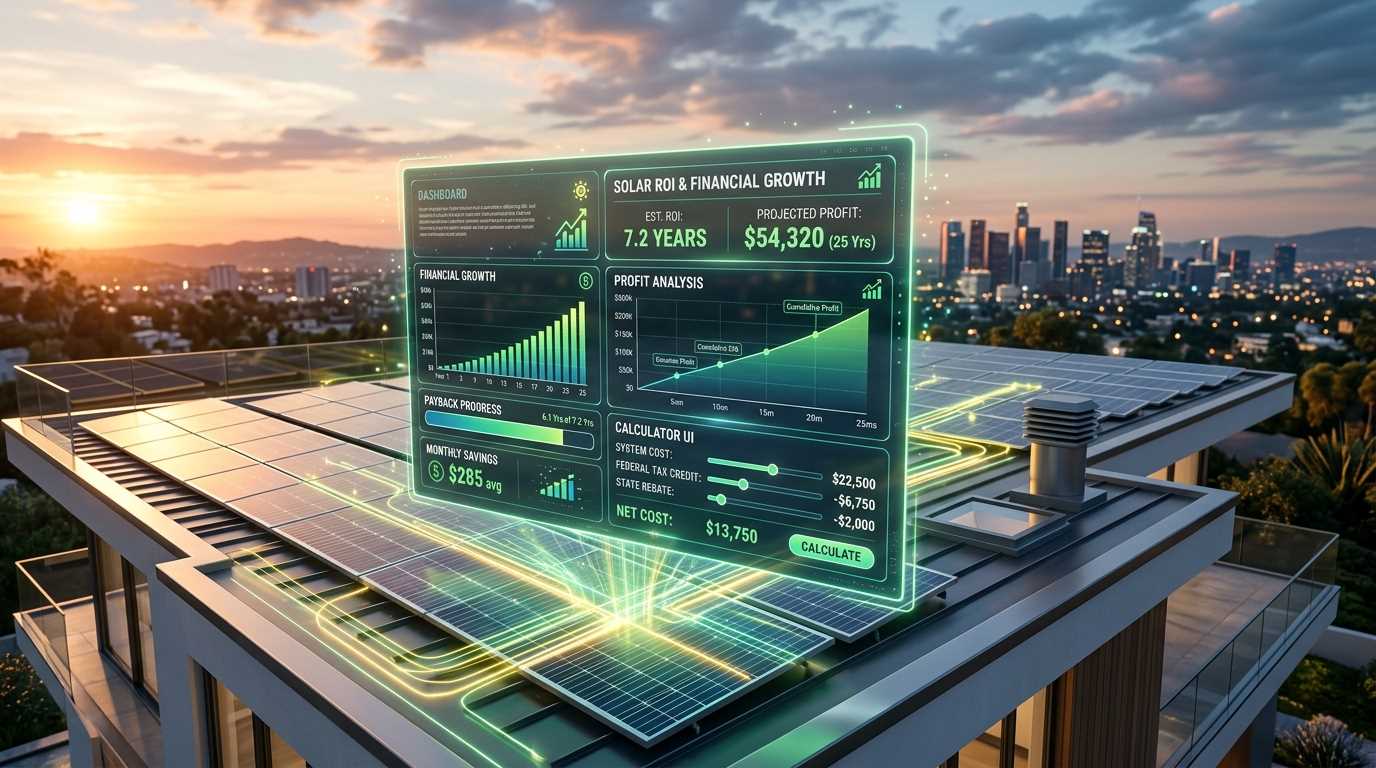
If you want the headline: the average American homeowner with a properly sized solar panel system saves between $1,200 and $2,400 per year on electricity in 2026. Over a 25-year system life, that's $30,000 to $60,000 in total savings. But averages lie — your actual savings depend heavily on where you live, how much electricity you use, and what your utility company pays for excess power. I always recommend running a solar ROI calculator with your specific numbers first.
Here's what the data actually looks like across different scenarios. These numbers come from published utility rates, NREL PVWatts production data, and real homeowner reports I've collected over the past two years:
- Low usage home (under 600 kWh/month): $600 to $1,200/year in savings. Think small homes, efficient apartments, or homes where nobody is there during the day.
- Average home (800-1,100 kWh/month): $1,200 to $2,000/year. This covers the majority of US households.
- High usage home (1,200+ kWh/month): $2,000 to $3,500/year. Large homes, hot climates with heavy AC use, or homes with pools and EVs.
The highest savings I've personally seen from a single installation was a family in central Florida with a 10 kW system, a pool pump running 24/7, and an electric bill that used to hit $450 a month in summer. Their annual savings after solar: $3,800. Over 25 years, even accounting for panel degradation, they'll save well over $80,000. You can model similar scenarios using a solar panel output calculator to estimate production.
💡 Key Insight
The US average residential electricity rate hit $0.172 per kWh in late 2025, up from $0.156 in 2023. Every rate increase makes solar more valuable. Homeowners in states like California ($0.30/kWh) and Hawaii ($0.43/kWh) see the highest per-kWh savings. See the latest DOE solar savings data for more.
How Solar Savings Break Down Month by Month
Solar savings are not consistent every month — and if you go into this expecting a flat credit on every bill, you'll be confused. Let me show you what a real year looks like using my own system in Texas as an example. I have a 7.2 kW system facing south with minimal shading.
- January: Production ~550 kWh. Savings: $85. Short days, lower sun angle. But my heating is gas, so my electric bill is low anyway.
- February: Production ~620 kWh. Savings: $95. Slightly better sun angle, still limited daylight.
- March: Production ~800 kWh. Savings: $130. Spring sunshine kicks in. This is usually when my system first covers 100% of my usage.
- April: Production ~880 kWh. Savings: $145. Peak production before the extreme summer heat.
- May: Production ~950 kWh. Savings: $155. Longest days of the year approaching.
- June: Production ~1,000 kWh. Savings: $165. Maximum sun hours. But this is also when my AC starts running hard.
- July: Production ~980 kWh. Savings: $160. Peak heat means I'm using more power, but the panels are keeping up.
- August: Production ~960 kWh. Savings: $155. Similar to July. Still producing enough to offset most of my AC costs.
- September: Production ~850 kWh. Savings: $140. Heat eases, production stays decent.
- October: Production ~750 kWh. Savings: $120. Shorter days, less AC needed.
- November: Production ~580 kWh. Savings: $90. Fall means reduced sun hours.
- December: Production ~500 kWh. Savings: $78. Lowest production month.
Total annual production: about 9,420 kWh. Total annual savings: roughly $1,618. The key takeaway is that summer months do the heavy lifting — June through August account for about 30% of annual production. If you're sizing a system, you want it designed around your highest-consumption months, not your lowest.
Managing Seasonal Variability
The month-to-month swings don't mean solar is unreliable — they mean you need to think about solar on an annual basis, not a monthly one. Most utilities reconcile your net metering annually. So the excess you produce in April carries forward to offset the shortfall in December. That's why net metering policy is so critical to your savings. Let's look at that in detail next.
Net Metering: Your Secret Weapon for Bigger Savings
Net metering is the mechanism that makes solar financially viable for most homeowners. Here's how it works in plain English: when your panels produce more electricity than your home is using, the excess goes back to the grid. Your meter literally runs backward. You earn a credit for every kWh you send. Later, when your panels aren't producing (at night, or on cloudy days), you draw from the grid using those credits.
The critical detail is the rate at which your utility credits you. Under true net metering (often called 1:1 net metering), you get credited at the same retail rate you pay for electricity. You put in 1 kWh, you get 1 kWh of credit. That's the best-case scenario for your savings.
But not all states have 1:1 net metering anymore. California's NEM 3.0, implemented in April 2023, reduced export rates to roughly $0.08 per kWh — less than a third of the retail rate of $0.30. This cut solar savings for California homeowners significantly and made battery storage much more attractive. Other states considering similar changes include Florida and Arizona.
As of early 2026, the states with the strongest net metering policies include:
- New York, Massachusetts, Connecticut: Full 1:1 retail net metering for residential systems up to 25 kW.
- New Jersey, Pennsylvania, Maryland: 1:1 retail net metering, though some utilities have minor variations.
- Texas: Varies by utility. Austin Energy offers 1:1, while some TXU plans credit at wholesale rates.
- Florida: 1:1 net metering for investor-owned utilities, but the policy is under legislative review.
Before going solar, check your specific utility's net metering policy. It can mean the difference between a 6-year payback and a 12-year payback on the exact same system.
🔧 Pro Tip
- Call your utility directly and ask: "What is your current net metering export rate for residential solar?" Don't rely on your installer to tell you — verify independently.
- If your export rate is below $0.10/kWh, strongly consider adding a battery to store excess production instead of sending it to the grid cheaply.
State-by-State Savings Comparison
Where you live is the single biggest factor in how much solar will save you. Here's a snapshot of typical annual savings for an average 7 kW system in key states, based on 2025-2026 electricity rates and production data:
- California: $2,100-$2,800/year. Highest electricity rates ($0.30/kWh avg) mean huge per-kWh savings, though NEM 3.0 reduced export credits.
- New York: $1,500-$2,200/year. Strong incentives plus rates around $0.22/kWh. Excellent solar state despite less sunshine than the Southwest.
- Texas: $1,400-$2,000/year. Great sun exposure, rates around $0.14/kWh, and high AC usage mean panels offset expensive summer bills.
- Florida: $1,300-$1,800/year. Lots of sun but relatively low electricity rates ($0.13/kWh). High humidity means good overall production.
- Arizona: $1,200-$1,700/year. Best sun in the country, but lower electricity rates ($0.13/kWh) and extreme heat slightly reduce panel efficiency.
- Massachusetts: $1,400-$1,900/year. Strong SMART program payments plus rates near $0.28/kWh make it a top solar state.
- Hawaii: $3,000-$4,500/year. By far the highest rates ($0.43/kWh). Solar is almost a no-brainer if you can afford the upfront cost.
- Colorado: $1,100-$1,600/year. Good sun, moderate rates ($0.14/kWh), and decent state incentives.
- North Carolina: $1,000-$1,400/year. Growing solar market with moderate rates ($0.12/kWh).
- Washington: $800-$1,200/year. Lower sun hours but still worthwhile with rates around $0.11/kWh and state incentives.
Notice something counterintuitive? Arizona has better sun than New York, but New York homeowners often save more because of higher electricity rates and stronger incentives. Sun matters, but economics matters more.
The Impact of Rising Electricity Prices
Here's something that doesn't get enough attention: electricity prices in the US have risen an average of 2.8% per year over the past decade. In some states, the increases have been much steeper. California saw a 12% rate increase in 2023 alone when NEM 3.0 took effect. Texas rates jumped 8% between 2022 and 2024.
This matters enormously for your solar savings. When you install panels today, you're essentially locking in your electricity cost for the next 25 years at today's rates. Every future rate increase makes your solar investment more valuable. Let me show you what this looks like:
If you currently pay $150 per month for electricity and solar reduces that to $20 (mostly grid connection fees), you're saving $130/month at today's rates. But if electricity prices rise 3% per year, that $130 becomes $175 in five years, $235 in ten years, and $315 in twenty years. Your savings actually grow over time, even as your panels produce slightly less. This is the hidden superpower of solar that simple ROI calculators miss.
💡 Key Insight
Factoring in 3% annual electricity price inflation increases the 25-year savings of a typical solar system by 35-45% compared to static-rate calculations. Always run your numbers with rate inflation included.
Depreciation and Long-Term Value
Solar panels are a depreciating asset in the sense that they produce less power each year — about 0.5% degradation annually for quality panels. But your home's value actually increases with solar. A 2025 Lawrence Berkeley National Laboratory study found that each watt of solar capacity adds approximately $4 to home value. A 7,000-watt system would add roughly $28,000 to your home's resale price.
This appreciation factor is separate from your electricity savings and can significantly improve your overall return. If you plan to sell your home in 10 years, you're not just getting 10 years of electricity savings — you're also recouping a large portion of your investment through increased property value.
One caveat: the added value depends on your local real estate market and whether buyers in your area appreciate solar. In markets like California, Colorado, and New Jersey, solar is a recognized home improvement that buyers actively seek out. In areas where solar is less common, the value add may be closer to the system's remaining production value rather than a premium.
Financing vs Buying Outright
How you pay for solar dramatically affects your actual savings. Let me be blunt about this because the solar industry does not always make it clear:
Cash purchase: Maximum savings. You pay upfront, claim all federal tax credits (IRS), and start saving immediately from day one. A $20,000 cash system with a $6,000 federal credit costs you $14,000 net. Every dollar of electricity savings goes straight to your pocket.
Solar loan: Most common option in 2026 — about 70% of residential installations use financing. A typical solar loan might be $20,000 at 6.99% over 20 years. Monthly payment: roughly $155. If your electricity savings are $170/month, you're still ahead by $15/month from day one. After the loan is paid off, all savings are yours. You still claim the federal tax credit.
Solar lease/PPA: The installer owns the system; you pay them for the power. Monthly payment is typically 10-20% less than your current electric bill, so you save something — but far less than owning. You don't get the tax credit (the installer does). Over 25 years, a lease might save you $15,000 total vs. $40,000+ if you'd bought. I generally advise against leases unless you truly cannot afford any other option.
The sweet spot for most people is a solar loan with no money down, where your monthly loan payment is less than your current electric bill. That way, you're saving money from month one without any upfront cash.
Maximizing Your Solar Savings
Once your panels are installed, there are several strategies to squeeze every possible dollar of value out of them:
- Shift your energy usage to daytime hours. Run your dishwasher, washing machine, and dryer between 10 AM and 3 PM when your panels are producing. Every kWh you use directly from your panels is a kWh you don't buy from the grid or sell back at a lower rate.
- Install a smart thermostat. Pre-cool or pre-heat your home during peak solar production hours. This effectively uses your home's thermal mass as a battery. In my house, I pre-cool to 70 — F at 2 PM, then let it drift up to 76 — F by evening. Saves an extra $15-25/month in summer.
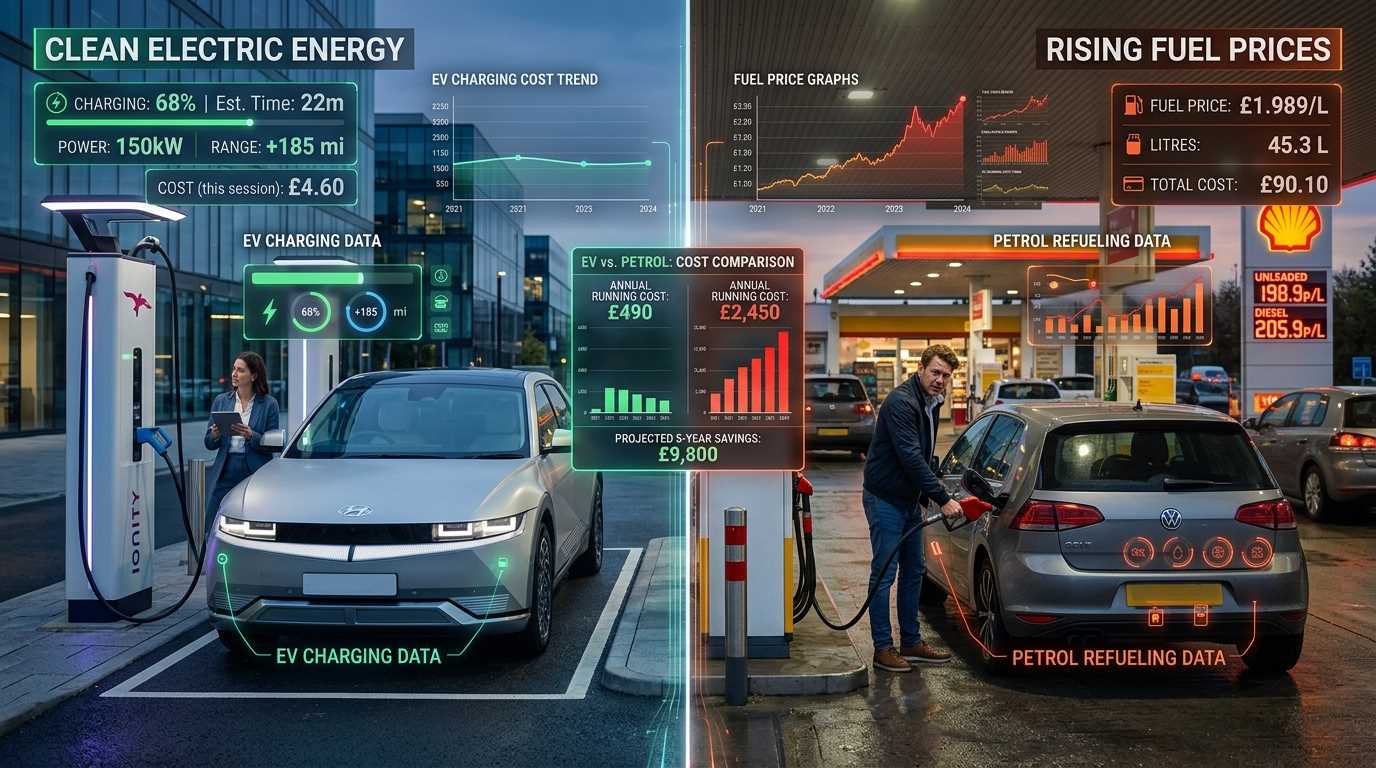
- Time your EV charging to solar hours. If you have an electric vehicle, charge it during the day when your panels are producing. This can offset $50-100/month in gas costs on top of your electricity savings.
- Keep panels clean. Dirty panels can lose 5-15% of their output. In dusty areas, clean them quarterly. In rainy areas, nature does most of the work. I spray mine with a garden hose twice a year — takes 20 minutes and costs nothing.
- Monitor your production daily. Use your inverter's monitoring app to check that your system is producing what it should. If you notice a sudden 10%+ drop, something may be wrong — a shaded panel, a faulty connection, or an inverter issue. Catching problems early saves money.
These optimization strategies won't double your savings, but they can add an extra 10-20% on top of your baseline — that's $200 to $400 extra per year for the average system. Over 25 years, that's $5,000 to $10,000 in additional value from small behavioral changes. For a deeper dive, check my guide on calculating solar ROI for beginners.
🔧 Pro Tip
- If your utility offers time-of-use rates with higher prices in the evening (4-9 PM), consider a battery to store solar production for those peak hours.
- Set a calendar reminder every 6 months to check your production data against expected output. Most monitoring apps show both.