Free Online Calculators (Our Picks)
Free online calculators are the starting point for anyone serious about energy savings. They require zero investment, take 5-10 minutes to complete, and give you an immediate baseline understanding of your energy usage and savings opportunities. Here are the categories that matter most:
Home energy usage calculators estimate your total consumption by appliance and category. They're the best first step because they answer the fundamental question: "Where is my electricity going?" Input your square footage, monthly bill, and major appliances, and the calculator produces a breakdown showing that your HVAC is 45% of your usage, your water heater 18%, and so on. This single insight — knowing your biggest energy consumer — is more valuable than most people realize because it tells you exactly where to focus your attention. Try our home energy calculator to get started.
Electricity bill estimators help you predict your next month's bill based on weather forecasts, usage patterns, and rate information. These are particularly useful if your utility doesn't provide mid-cycle usage data. Enter your current usage trajectory, the expected temperature change for next month, and your rate — the calculator predicts your bill within $15-25 for most households.
Energy savings calculators model the financial impact of specific upgrades. "What if I add attic insulation?" "What if I replace my 15-year-old AC unit?" "What if I switch to LED bulbs throughout?" Each scenario gives you estimated annual savings, payback period, and 10-year cumulative savings. These are the tools you use after the home energy calculator has identified your problem areas.
LED savings calculators specifically model the cost of switching from incandescent or CFL bulbs to LEDs. Input the number of each type of bulb you have and your electricity rate, and it tells you exactly how much you'll save per year and over the lifetime of the LED bulbs. Simple, but surprisingly eye-opening for people who still have 20+ incandescent bulbs.
Carbon footprint calculators put your energy usage in an environmental context. They measure your total CO2 emissions from transportation, home energy, food, and consumption. The connection to energy savings is direct: every action that reduces your carbon footprint (driving less, using less energy, eating lower on the food chain) also reduces your spending.
Smart home savings calculators estimate the combined impact of smart thermostats, smart plugs, energy monitors, and other connected devices. Input which devices you have or plan to buy, and the calculator models your expected savings. This helps you decide which smart home investments are worth making first. Calculate your own potential savings with our smart home savings calculator.
💡 Key Insight
People who use at least one energy calculator before making upgrades save an average of 25% more than those who upgrade based on gut feeling. The calculator identifies the highest-ROI upgrades for your specific situation instead of generic advice that may not apply to your home.
Smart Home Hardware
Beyond calculators, physical devices that monitor and control your energy usage are the next layer of the toolkit. Here are the categories and my top picks for 2026:
Smart thermostats are the single most impactful smart home energy device. My top picks: Ecobee Smart Thermostat Enhanced ($189) for the included room sensor and best-in-class app, Nest Learning Thermostat 4th gen ($249) for its auto-scheduling AI, and Amazon Smart Thermostat ($80) for budget-conscious buyers. All three save 8-15% on HVAC costs. See my detailed comparison in the smart home devices article on this site.
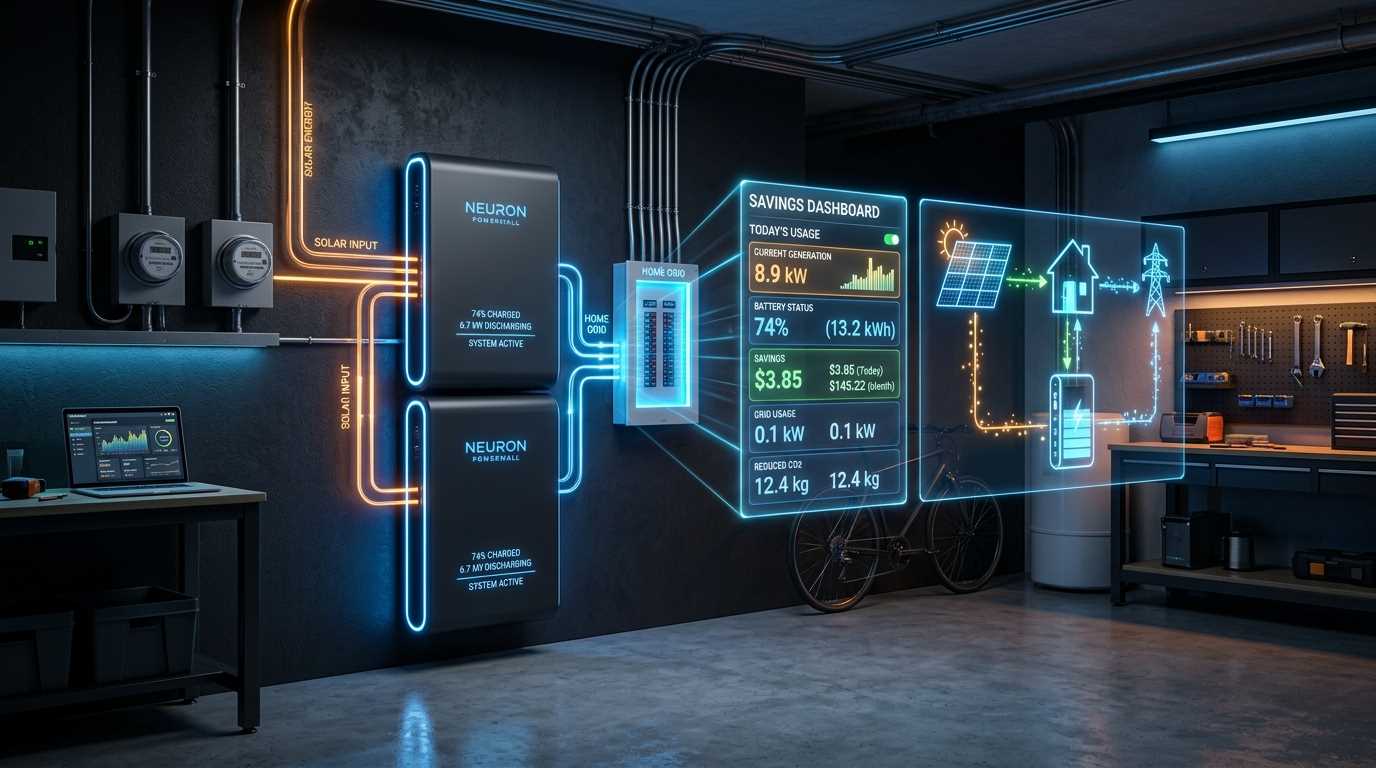
Energy monitors give you real-time visibility into your home's electricity consumption. The Sense Home Energy Monitor ($299) uses machine learning to identify individual appliances by their electrical signatures. The Emporia Vue ($150-200) uses circuit-level clamps for 100% accuracy on monitored circuits. For a budget option, the Shelly EM ($30) monitors 2 circuits and integrates with Home Assistant. Energy monitors don't save energy directly — they show you where waste is happening so you can act on it.
Smart plugs cost $8-15 each and eliminate standby power from entertainment centers, home offices, and always-on devices. Top picks: Kasa Smart Plug (TP-Link, $9.99) for reliability and app quality, Wyze Plug ($7.99) for budget, and Eve Energy ($39.99) for built-in energy monitoring. Deploy 5-10 smart plugs throughout your home for $50-$150 total investment.
Smart power strips combine multiple outlets with master/slave logic — when the master device turns off, all slave outlets cut power automatically. The TP-Link Kasa Smart Power Strip ($40) and Belkin Conserve Smart AV ($50) are my top picks. These are ideal for entertainment centers and home offices where multiple devices need coordinated power management.
Kill-A-Watt meter ($25) is the simplest energy diagnostic tool you can buy. Plug any device into it and see exactly how many watts it's drawing. This is how you verify that your "energy-efficient" refrigerator is actually using less power, or that your cable box really does draw 40 watts on standby. Every homeowner should own one of these.
"The Kill-A-Watt meter is the single best $25 you can spend on understanding your home's energy usage. In 30 seconds per device, you can measure the actual power draw of anything in your house. I've found $500+ per year in wasted electricity using this tool."
Energy Monitoring Apps
Apps complement hardware by giving you historical data, alerts, and analysis. Here are the best ones available in 2026:
Utility company apps: Most major utilities now offer apps with daily or hourly usage data, bill predictions, and comparison tools. These are free and often the most accurate data source since they come directly from your meter. If your utility offers an app, download it first before looking at third-party options. You can cross-reference your usage against national averages from the EIA energy data.
EnergyHub / Bidgely: These platforms aggregate data from your utility, smart thermostat, and other devices to give you a comprehensive energy dashboard. They provide personalized recommendations, usage alerts, and bill forecasting. Many utilities offer these for free as part of their customer programs.
Energy Waste Detection apps: Apps like Gridium and Power cost analyze your usage patterns and automatically detect anomalies — a refrigerator that started using 50% more power last week, or an unexpected usage spike at 2 AM. These early warnings can save hundreds by catching failing equipment before it becomes a catastrophic energy drain.
Smart thermostat companion apps: If you have a smart thermostat, its app is your primary energy monitoring interface. The Ecobee and Nest apps both show you daily and monthly usage trends, compare your usage to similar homes, and provide monthly energy reports. Set aside 5 minutes each month to review your report — the behavioral feedback loop of seeing your numbers drives continuous improvement.
Utility Company Tools
Your utility company is an underrated resource for energy savings. Most offer far more than just billing — here's what to look for:
- Home energy reports: Many utilities mail monthly reports comparing your usage to 100 similar homes in your area. These include a smiley-face rating and personalized tips. Studies show these reports reduce usage by 2-4% purely through social comparison.
- Usage alerts: Set up email or text alerts when your mid-cycle usage exceeds a threshold. If you've used 70% of your typical monthly consumption by day 20, something is wrong. Early detection prevents bill shock.
- Rebate programs: Utilities offer rebates for smart thermostats ($50-$100), energy-efficient appliances ($50-$200), LED bulbs (sometimes free), and insulation upgrades. Check your utility's website for current rebate offerings before buying any energy-related product.
- Time-of-use rate plans: If available, TOU plans reward you for shifting usage away from peak hours (typically 4-9 PM). Savings of 10-20% are achievable with minimal lifestyle changes. Ask your utility about TOU options.
- Free energy audits: Some utilities offer free or heavily subsidized home energy audits. These are professional-grade assessments using blower door tests and infrared cameras. If your utility offers this, take advantage — it normally costs $300-$500.
- Budget billing: Spreads your annual energy cost across 12 equal monthly payments. This doesn't reduce your total cost, but it eliminates seasonal bill shocks and makes budgeting predictable.
Government Resources
Federal, state, and local governments maintain extensive energy resources that most people don't know about:
DSIRE (Database of State Incentives for Renewables and Efficiency): Run by NC State University and funded by the DOE, DSIRE lists every available energy incentive in every state. Search by zip code to find tax credits, rebates, and loan programs for insulation, solar, heat pumps, windows, and more. This is the single most useful government energy resource. URL: dsireusa.org
ENERGY STAR Home Advisor: The EPA's ENERGY STAR online tool helps you identify ENERGY STAR certified products and estimate savings from upgrading to them. Covers appliances, HVAC, water heaters, windows, and building materials. All products listed meet strict efficiency standards.
DOE Home Energy Saver: The Department of Energy's online home energy audit tool. Enter your home's characteristics and get a detailed analysis of energy usage and recommended upgrades with estimated costs and savings. More comprehensive than most commercial tools but requires more input data.
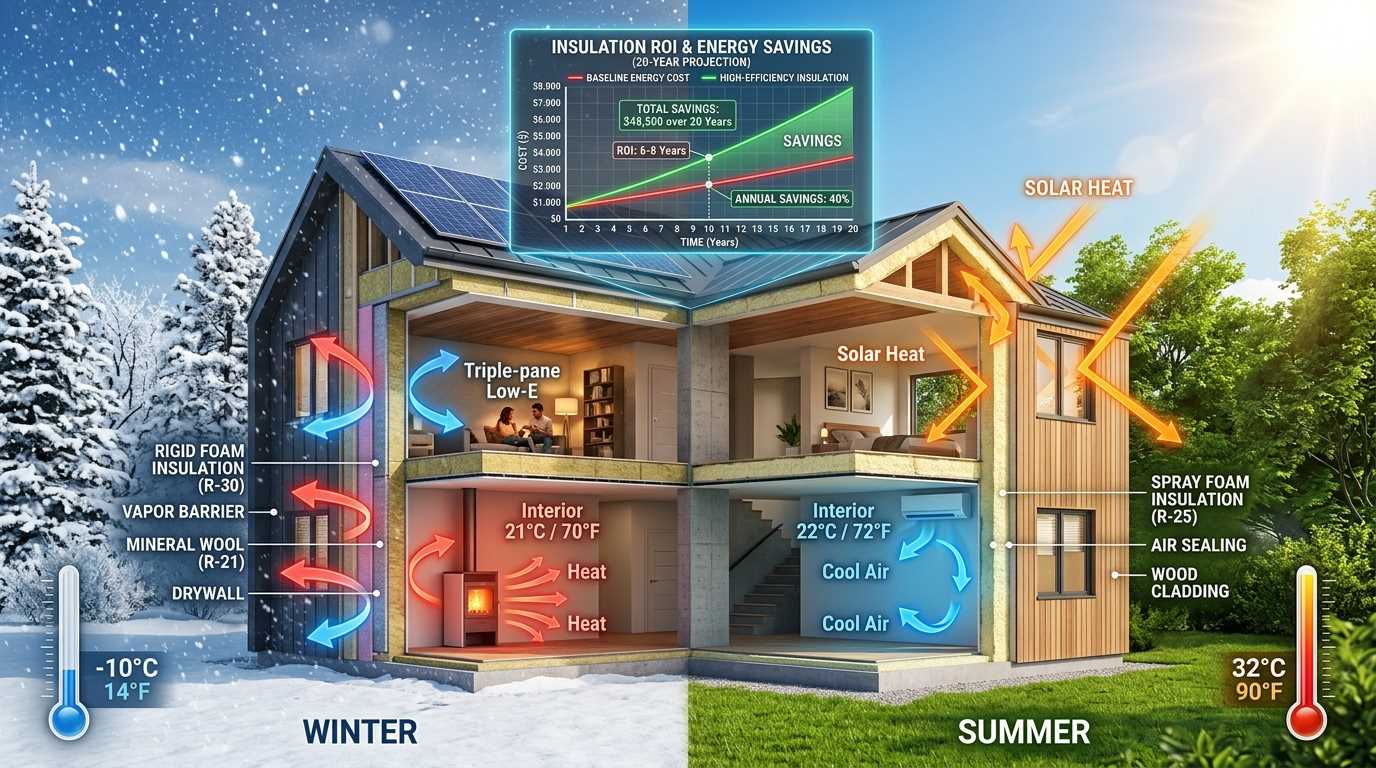
Federal tax credits (IRA 25C): The Inflation Reduction Act extended through 2032 provides 30% tax credits for many energy upgrades: insulation ($1,200/year cap), windows ($600/year), doors ($500/year), heat pumps ($2,000/year), electrical panel upgrades ($600/year), and home energy audits ($150/year). These credits apply to your annual tax return and can be claimed every year through 2032.
Professional Audit Services
Sometimes you need a professional. Here's when and what to expect:
Standard home energy audit ($200-$500): A certified energy auditor visits your home for 2-4 hours, conducts a blower door test, inspects insulation, checks ductwork, analyzes your utility bills, and produces a written report with prioritized recommendations. Look for auditors certified by RESNET or BPI. The report typically identifies $500-$2,000/year in savings opportunities.
Infrared thermography add-on ($100-$200): An infrared camera scan reveals hidden insulation gaps, air leaks, and thermal bridges that are invisible to the naked eye. Best done during extreme weather (very cold or very hot) when the temperature differential makes thermal anomalies obvious. This is particularly valuable for homes built before 1980.
Combustion safety testing ($50-$150): Tests for carbon monoxide, backdrafting from gas appliances, and gas leaks. Essential for homes with gas furnaces, water heaters, or stoves. This is a health and safety test as much as an energy test.
Duct testing ($100-$300): Pressurizes your duct system to measure leakage. If your ducts are in an unconditioned attic or crawlspace, this test often reveals 20-30% duct leakage — meaning a quarter of your conditioned air is escaping before reaching your rooms. Sealing those ducts is one of the highest-ROI upgrades available.
🔧 Pro Tip
- Many utilities offer free energy audits — always check before paying for one privately. The utility-provided audit is often just as thorough and costs nothing.
- If your audit costs more than $500 out of pocket, ask whether the auditor will also do the recommended work. Auditors who also do installations have a conflict of interest (they may recommend unnecessary upgrades). Independent auditors are preferred.
Building Your Energy Toolkit
Here's how I recommend assembling your energy savings toolkit, phased by investment level:
Free tier ($0): Online energy calculators (including ours), your utility company's app and energy reports, the DSIRE database for rebates, and the ENERGY STAR product finder. Total cost: $0. Total potential insight: enormous. You can identify $500-$1,000/year in savings opportunities using only free tools.
Budget tier ($50-150): Add a Kill-A-Watt meter ($25), 5 smart plugs ($40-50), and a basic smart thermometer ($15). This hardware layer lets you measure individual devices and control standby power. Combined with the free tools, this toolkit can identify and capture $800-$1,500/year in savings.
Intermediate tier ($200-500): Add a smart thermostat ($80-250), an energy monitor ($150-300), and smart power strips ($40-80). This is the sweet spot for most households — comprehensive monitoring and automated control. Savings potential: $1,000-$2,000/year.
Advanced tier ($500-1,500): Add professional energy audit ($200-500), infrared scan ($100-200), and smart water heater controller ($200). This tier is for people who want maximum visibility and optimization. Savings potential: $1,500-$3,000/year.
Getting Started: The Minimum Viable Setup
If you want to start today with the absolute minimum effective setup, here it is:
- Run our home energy calculator (5 minutes, free). Get your usage baseline and identify your top 3 savings categories.
- Download your utility company's app (5 minutes, free). Enable usage alerts and review your 12-month history.
- Buy a Kill-A-Watt meter ($25). Test your 5 most-used appliances this weekend. You'll find at least one surprise.
- Adjust your water heater to 120 — F and your thermostat by 2 degrees (10 minutes, free). These two changes alone save $50-$150/year.
That's it. Four steps, 20 minutes, $25 spent. From this starting point, you can layer on additional tools and upgrades over time. But even with just this minimum setup, most people save $200-$500 in their first year — a return of 800-2,000% on their $25 investment.
The key insight that runs through every tool and technique in this guide: measurement precedes improvement. You can't reduce your energy bills without first understanding where the energy goes. Every tool in this toolkit serves that fundamental purpose — making the invisible visible, the abstract concrete, and the overwhelming manageable.